• Skip to primary navigation
  • Skip to main content
Discovery Isle
  • About Us
    • History
    • Locations
    • Private Preschool Advantage
    • Health & Safety
    • Blog
  • Preschool
    • Overview
    • Our Curriculum
    • Family Communication
    • Infants
    • Toddlers
    • Beginners (2-3 yrs)
    • Intermediates (3-4 yrs)
    • Pre-K
  • Camp & After School
    • Summer Camp
    • Before & After School
Contact Us
 
  • About Us
    • History
    • Locations
    • Private Preschool Advantage
    • Health & Safety
    • Blog
  • Preschool
    • Overview
    • Our Curriculum
    • Family Communication
    • Infants
    • Toddlers
    • Beginners (2-3 yrs)
    • Intermediates (3-4 yrs)
    • Pre-K
  • Camp & After School
    • Summer Camp
    • Before & After School
Contact Us

racheldoumel

Week of the Young Child: A Celebration of Early Education

Week of the Young Child (WOYC), sponsored by the National Association for the Education of Young Children (NAEYC), is a special celebration that highlights the importance of early childhood education, the amazing young learners in our care, and the people who support them. 

During this exciting week, learning comes to life with themed days like Music Monday, Tasty Tuesday, Work Together Wednesday, Artsy Thursday, and Family Friday. Each theme sparks fun, hands-on activities that mirror the meaningful moments happening in our classrooms every day, all inspired by our Links to Learning curriculum. As we celebrate, we reaffirm our commitment to giving every child engaging early experiences that build a strong foundation for the future.

To learn more about the importance of early childhood education and WOYC, we’re speaking with Gilda Villaflores from our Education Team. With over 20 years of experience in early childhood education, Gilda brings a strong background as a teacher, mentor, and director.

Hi, Gilda. Can you explain why early childhood education is so important?

Early childhood education is crucial because it lays the foundation for a child’s lifelong learning. It helps children develop language, social-emotional, and cognitive skills through play, exploration, and guided experiences. These early years are a time of rapid brain development, and quality learning environments give children the confidence and skills they need in school and beyond. 

Can you share what Week of the Young Child celebrations look like in our classrooms?

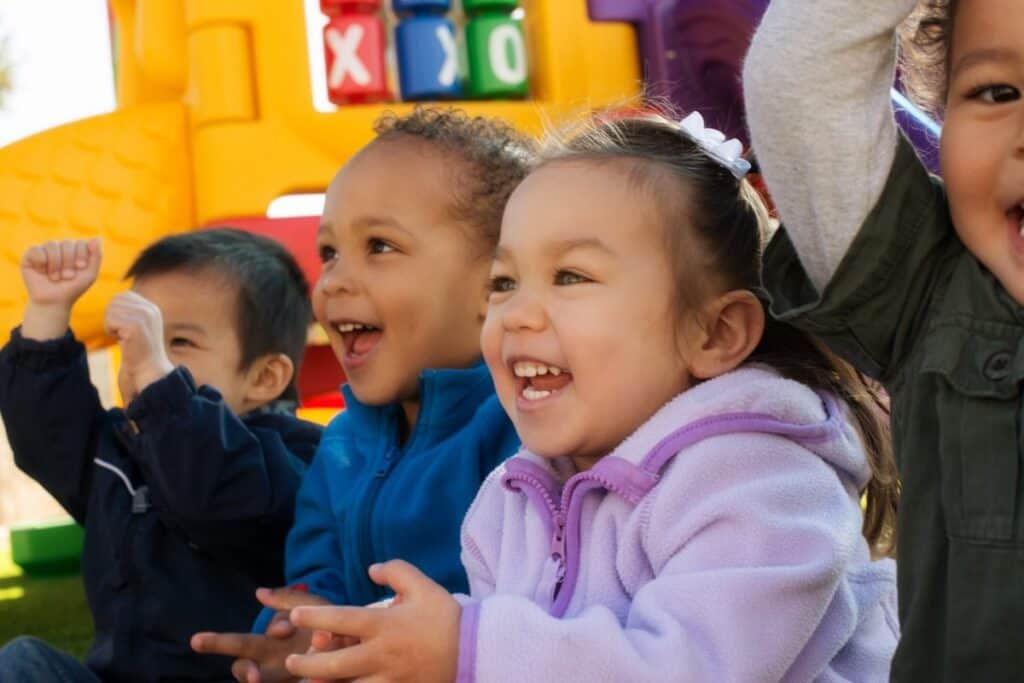
We celebrate this important week with hands-on activities that spark curiosity and joy. Children explore fresh, exciting ideas through music, cooking, art, building, and play, practicing important skills along the way. We also take time to honor our educators for their dedication and care. The week is filled with learning, teamwork, and fun!

How does Week of the Young Child foster social-emotional skills?

Through music activities, children engage in group experiences and express themselves. Collaborative projects—such as cooking, building, or creating art together—encourage sharing, patience, and problem-solving. By celebrating families and school communities, children develop a strong sense of self, belonging, and connection. 

How are language & literacy promoted this week?

Language and literacy are woven into every activity. Listening to music and singing songs strengthens phonological awareness and expands vocabulary. When children follow cooking instructions and build together, they practice early reading skills, sequencing, and using descriptive language. Children share stories about their art and families. All of these experiences nurture strong language skills and lay the foundation for future learning.

Can you tell us how Week of the Young Child supports numeracy and math skills? 

Yes! As children explore rhythm and beats on Music Monday, they learn patterns and sequences. Measuring ingredients, counting items, and comparing quantities on Tasty Tuesday help strengthen number sense. Building and design activities during Work Together Wednesday support spatial relationships (how things fit together) and problem-solving. When children engage in art activities on Artsy Thursday, they may sort materials and notice shapes and sizes.

I’d love for you to tell us more about Family Friday.

On Family Friday, we talk about our own families and our school community, helping children recognize the support and care around them. We invite families to a special event that brings our whole community together. This day strengthens the bond between home and school, fosters a sense of belonging, and shows children that their learning is valued by the people who matter most.

Can you recommend any resources for families who want to learn more or incorporate some ideas at home?

Families can refer to some of our previous blogs for ideas.

Musical Milestones for Infants, Toddlers, and Preschoolers

Nurturing Young Taste Buds: A Guide to Helping Picky Eaters

The Benefits of Small Group Learning in Centers

10 Art Activities for Toddlers and Preschoolers

How Bedtime Routines Promote Connection

I also love these articles that highlight the benefits of art, music, and working together: The Complete Guide to Process Art, Music Supports All Learning, and Let’s Work Together.

Thanks, Gilda. Do you have any closing thoughts? 

Week of the Young Child is a special time to celebrate early learning, children, and the amazing work happening in our classrooms. While we bring the daily themes to life this week, experiences like these are part of our everyday learning!

To learn more, contact us today!
10 Art Activities for Toddlers and Preschoolers

Young children are natural creators. They love to explore, experiment, and make things with their hands. When you let your child create art at home, you give them the freedom to make choices, express themselves, and discover new skills along the way. Here are 10 art activities perfect for your toddler or preschooler to try today!

1. Sticky Contact Paper Collage

Tape a sheet of contact paper (sticky side up) to a table or wall. Let your child stick pom-poms, foam shapes, feathers, or any small items they can find onto the paper. Layering and arranging objects in different ways gives little hands a workout while building decision-making skills and sensory awareness.

2. Watered Chalk on Black Paper

Most kids have colored with chalk, but here’s something new to try. Dip the chalk in water and then draw on black paper. The colors practically glow! Your child will love seeing their creativity pop right off the page.

3. Foil Painting

Give your child a sheet of foil as a shiny new canvas along with paints, brushes, Q-tips, or feathers. Mixing colors on foil adds a shimmery effect. Adding natural scents like vanilla, cinnamon, or mint to the paint makes this activity even more sensory-rich. It’s a playful way to explore color, texture, and the senses. 

4. Tape, Then Paint

Give your child painter’s tape to make shapes or patterns on construction paper. Then, have them paint the entire paper. Once it’s dry, they can carefully peel away the tape to reveal crisp lines and hidden designs. This project boosts planning skills and introduces early ideas about patterns and negative space.

5. Jackson Pollock–Inspired Splatter Painting

Set up a canvas, cardboard, or an old sheet outdoors and let children fling, drip, or brush washable paints however they like. Layers, footprints, and brush strokes turn into a one-of-a-kind masterpiece. Splatter painting encourages gross motor skills, self-expression, and early appreciation for abstract art.

6. Bubble Painting

Fill cups with water, dish soap, and food coloring. Have your child blow bubbles with a straw until they reach above the top. Then, press a piece of paper onto the bubbles to create frothy, colorful prints. You can also scoop the bubbles onto paper with a spoon if you prefer. 

7. Paint Stamping

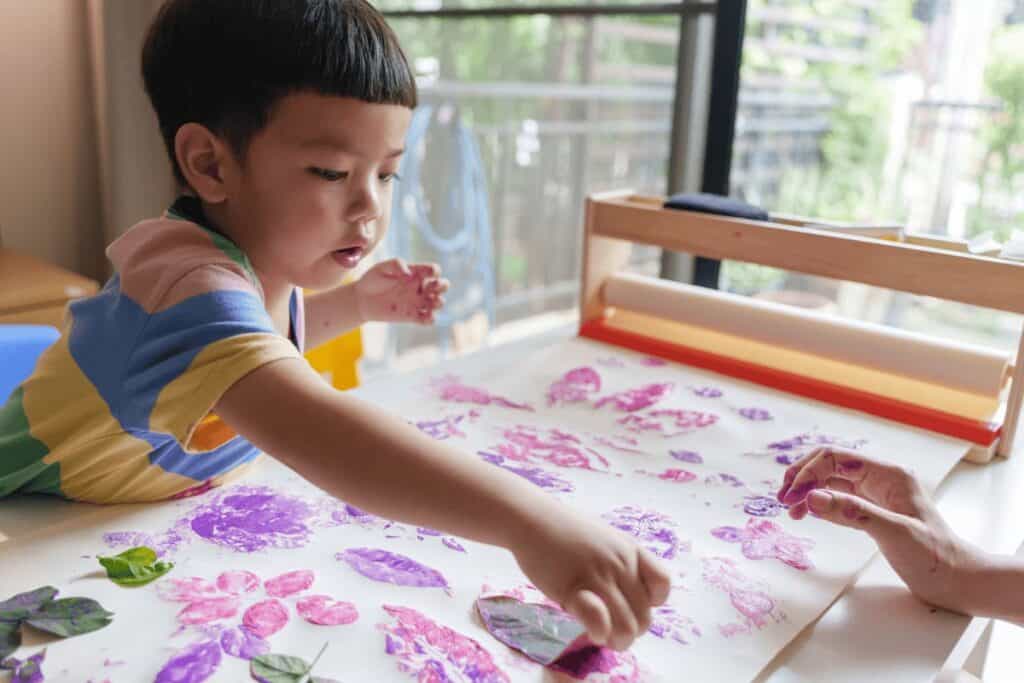
Gather small toys, natural items like leaves or flowers, rulers, or cookie cutters. Your child can dip them in paint and press them onto paper to make patterns and shapes. Drag the edge of a ruler through the paint to create new designs. Stamping encourages experimentation, hand-eye coordination, and creative planning.

8. Self-Portraits

Provide your child with a mirror and ask them to draw what they see. As they draw, talk about family traits: “Your eyes are brown like mine,” or “You have your abuelo’s nose and long eyelashes like your dad.” This helps children develop observation skills, self-awareness, and family connections, all while strengthening fine motor control skills.

9. Sticker Scenes

Provide sheets of stickers (animals, flowers, vehicles, or even simple dots), markers or crayons, and paper for your child to create scenes, combining imagination with fine motor skills. This activity promotes storytelling, sequencing, and hand dexterity.

10. Salt Dough Mosaics

Mix 4 cups of flour, 1 cup of salt, and 1.5 cups of warm water until it forms a soft dough. Flatten the dough until it’s about a half or full inch thick. Decorate with various dried beans. Bake at 200°F until dry, and you’ll have a keepsake to treasure forever! This activity lets creativity shine while strengthening fine motor skills.  

*Adult supervision is required. Always exercise caution and safety.

The Benefits of Summer Camp

Summer is full of possibilities for young children. The days are bright, curiosity is high, and little learners are eager to explore, play, and try new experiences. Keeping your child enrolled in preschool through the summer gives them a chance to enjoy all the excitement of the season while continuing to grow, make friends, and build skills that will support them all year long.

Let’s take a closer look at the benefits of summer camp for your child.

Learning Continues, With a Summer Twist

Our Links to Learning curriculum continues throughout the summer, but we also add special summer themes and hands-on projects that spark creativity and critical thinking to keep learning fresh and exciting.

You might see children creating pineapple volcanoes, building bug hotels, creating garden-inspired “stained-glass” art, or playing letter hockey outside. These activities are fun, but they are also purposeful. They foster academic and creative skills and encourage collaboration. 

Outdoor Fun

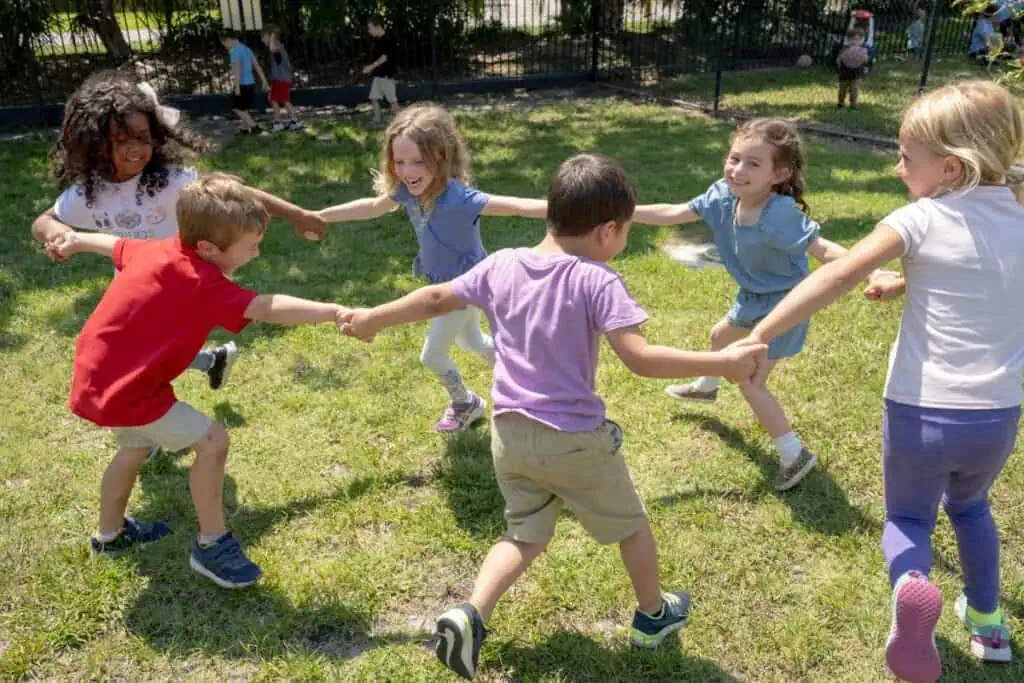
Outdoor play supports physical development, coordination, and teamwork. It also gives children the chance to connect with nature and enjoy unstructured play with friends. During summer camp, children engage in new outdoor activities such as group games, art projects, and nature walks. We spend extra time outdoors to enjoy all the season has to offer. 

Water play days are always a favorite. Children love time at the water table and splashing through water! As they play, children practice sharing space, taking turns, and following safety rules, all while having fun.

*Learn more about water play at our schools and how you can incorporate the fun at home here.

Special Guests and New Experiences

Throughout the summer, we welcome special guests and host engaging experiences. From magic and science shows to dance parties, cool summer treats, and more, our summer experiences keep the excitement going all season long.

Consistency, Safety, and Peace of Mind

By keeping your child here with us, they stay in a familiar, comforting environment with teachers they know and trust, as well as their friends. That consistency helps them feel secure, strengthens their relationships, and makes it easier to enjoy all the fun summer activities.

And for you, there’s peace of mind knowing your child isn’t just being watched, they’re learning, exploring, and fully engaged in a safe, enriching setting.

A Smooth Transition to Fall

Staying through the summer often makes the transition into the next classroom easier. Children gain confidence as they prepare for new expectations. In many cases, they begin building relationships with future teachers ahead of time, which helps ease first-day nerves.

For rising kindergarteners, our Kindergarten Enrichment program provides a balanced blend of focused academic practice and engaging camp fun. Children strengthen early literacy and math skills while practicing independence, listening skills, and classroom routines. This combination helps them feel prepared and excited for kindergarten.

The Best of Both Worlds

Summer with us lets your child enjoy all the fun of the season while still growing and learning. They’ll explore, build friendships, try new things, and strengthen both academic skills and social confidence. 
To learn more about our summer camp program, find a school today!

Reading Success: How We Foster Early Literacy in Our Classrooms

“Reading is important, because if you can read, you can learn anything about everything and everything about anything.” – Tomie dePaola

At our preschool, we believe early literacy is the foundation for lifelong learning. From the start, we nurture children’s ability to communicate, build vocabulary, and express their ideas. This happens every day as language and stories come to life in our classrooms. Here, infants and toddlers explore sounds and words. Two-year-olds begin to connect words with meaning. Preschoolers grow into confident speakers, storytellers, and early readers and writers.

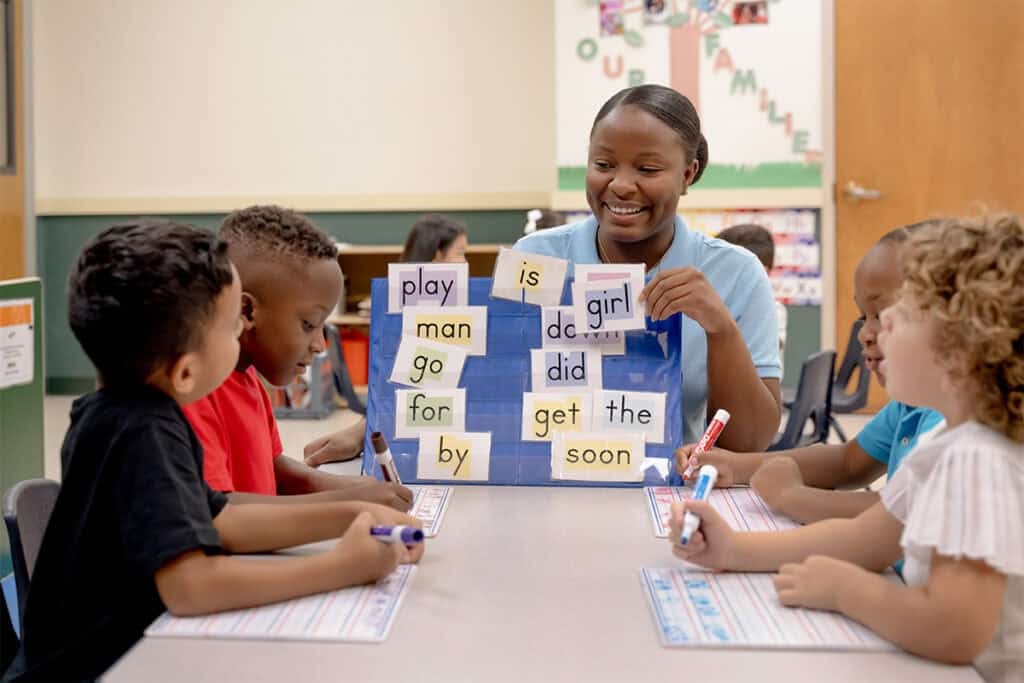
These skills are fostered through our Links to Learning curriculum, using research-based techniques proven effective. Instead of teaching letters one at a time, we introduce sounds and words in meaningful ways that build over time. When you walk into our classrooms, you’ll see children scribbling, singing fun songs, and “reading” to their friends. These moments may look like play, but they are important steps on the path to reading success. Let’s take a closer look at how we build early literacy skills each day:

Book-Based Curriculum

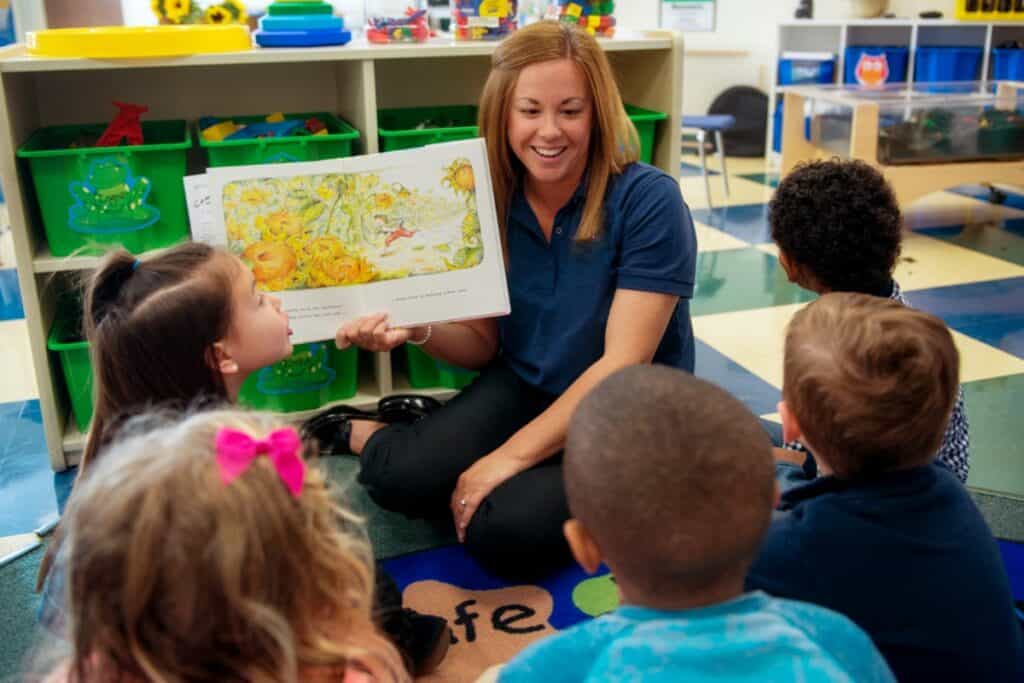
Each week, central books guide learning and set the theme for classroom activities.  For example, after reading The Mitten by Jan Brett, students might build animal habitats in the science center, write animal names in salt “snow” at the writing center, use animal puppets or costumes in dramatic play, and count how many animals fit into a mitten in the math center. When learning is built around a shared story, books come to life and children begin to see reading as exciting and meaningful.

Classroom Environment
  • Print-Rich Environment – Classrooms are thoughtfully designed so children see and use print every day. Labels on shelves, bins, and materials help children connect words to real objects and ideas. Familiar signs and logos for “cubbies” or the “art center” support word recognition and show children that print has meaning and purpose in everyday life.
  • Writing Opportunities – You might see cookbooks and notepads for writing recipes in dramatic play, graphing activities in the math center, or paper and markers in the science center for drawing and recording observations.
  • Books Everywhere – Each area, or center, of our classroom has books. If students are reading Mouse Paint, the book may be placed in the art center to inspire creativity as children experiment with color mixing. Nonfiction books about famous buildings from around the world might be found in our construction center. Books are rotated often to keep children curious and engaged.
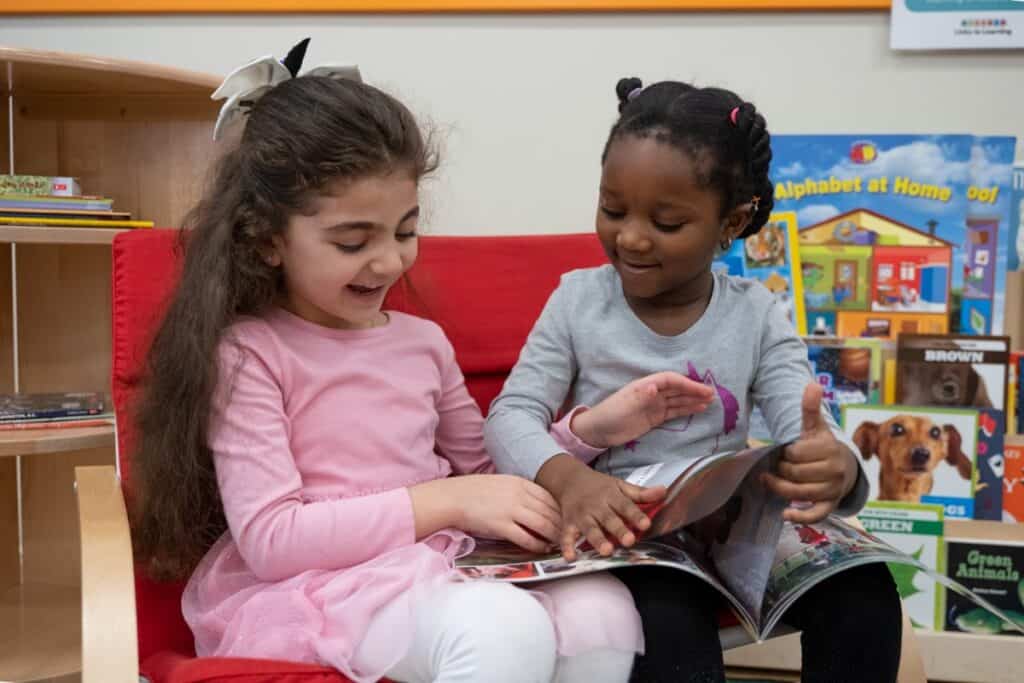
  • Cozy Reading Areas – Every classroom has inviting spaces with books, puppets, and flannel board pieces. Infants explore board books, toddlers interact with picture books, and older children retell stories or create their own. Children are encouraged to read independently and with their peers.

Teacher Interactions
  • Consistent Conversations & Daily Discussions – Simple, everyday conversations help strengthen brain development and language skills. In our younger classrooms, teachers narrate what children are doing, helping them connect actions to words. A teacher may say, “I see you pointing to the bananas. Snack time is coming soon,” or “You stacked those blocks so high!” Learning is extended by naming colors, counting objects, and encouraging children to repeat new words. As children grow, so do the conversations. Older students are guided with open-ended questions such as, “What do you think will happen next?” or “How could you fix that?” These discussions build vocabulary, support thinking skills, and help children express ideas with confidence.

  • Songs, Rhymes, & Chants – Teachers use music and rhythm to help children hear letter sounds, syllables, and patterns in language. They lead songs, repeat rhymes, and model actions like clapping syllables or tapping beats. As children grow, teachers introduce sound games and encourage children to create their own rhymes. These playful experiences help build phonological awareness.

Mastering Literacy Skills
  • Name Recognition – Learning to recognize and write their own name is a big milestone for young children. Toddlers point to their pictures and say their names, two-year-olds practice name identification during circle time and small group play, and Pre-K students practice writing their names independently in journals or on class projects.
  • Phonics & Letter Awareness – Phonics instruction is woven naturally, and intentionally, into the day. Teachers introduce and review letter names while giving children many opportunities to hear and practice specific letter sounds in meaningful contexts. For example, before reading Bear Snores On, a teacher might ask, “What letter makes the /b/ sound? Can we think of other words that begin with /b/?” In small-group and guided learning experiences, children strengthen their skills through enriching activities like fishing for letters in the sensory bin, matching magnetic letters to magnet boards, and playing interactive alphabet games such as sorting pictures by beginning sound. Instruction is adjusted to each child’s developmental level to support steady growth. 
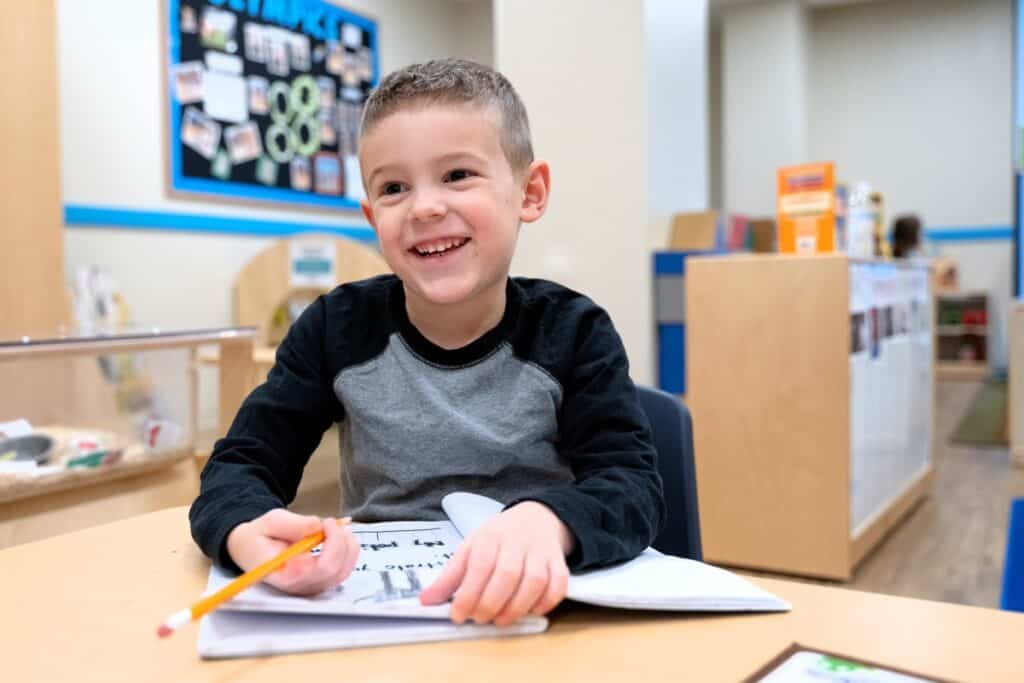
  • Pre-Writing Skills & Early Writing Skills – Writing development unfolds step by step as children build hand strength and confidence. Toddlers begin with whole-arm scribbles, two-year-olds form lines and shapes, and Pre-K students practice proper letter formation. Students use a variety of writing tools or even just their fingers to write in colored rice, sand, and more, making writing fun!
  • Sequencing – Sequencing helps children understand the order of events in stories and life. Two-year-olds retell familiar tales using picture cards, three-year-olds sequence events from books like If You Give a Mouse a Cookie, and Pre-K students describe multi-step processes during cooking activities or science experiments.
  • Journaling – Children record their thoughts, experiences, and artwork in journals or class-created books. Two- and three-year-olds may label drawings or dictate stories about their family, while Pre-K students write journal entries about vacations or celebrations.
  • Teacher-made books – Teachers create classroom books using children’s artwork, photos, or classroom events. Seeing their own work turned into books helps children feel proud and encourages them to read, share, and revisit their stories.

At every stage, our goal is the same: to help children build strong literacy skills and develop a love of reading that lasts a lifetime. The topics shared here are just a glimpse of the many ways our preschool brings this goal to life each day. By surrounding children with rich language experiences and guiding them with expert teaching, we make early literacy a journey that is fun, meaningful, and full of possibilities.

To learn more, contact us today! 
Looking for more tips and resources now? Click the links below.

Creative Activities to Build Your Child’s Vocabulary

How to Reinforce Literacy Skills During Your Child’s Day

How to Teach Baby Sign Language

What is Parallel Play? A Parent’s Guide to Social Development

What is Parallel Play?

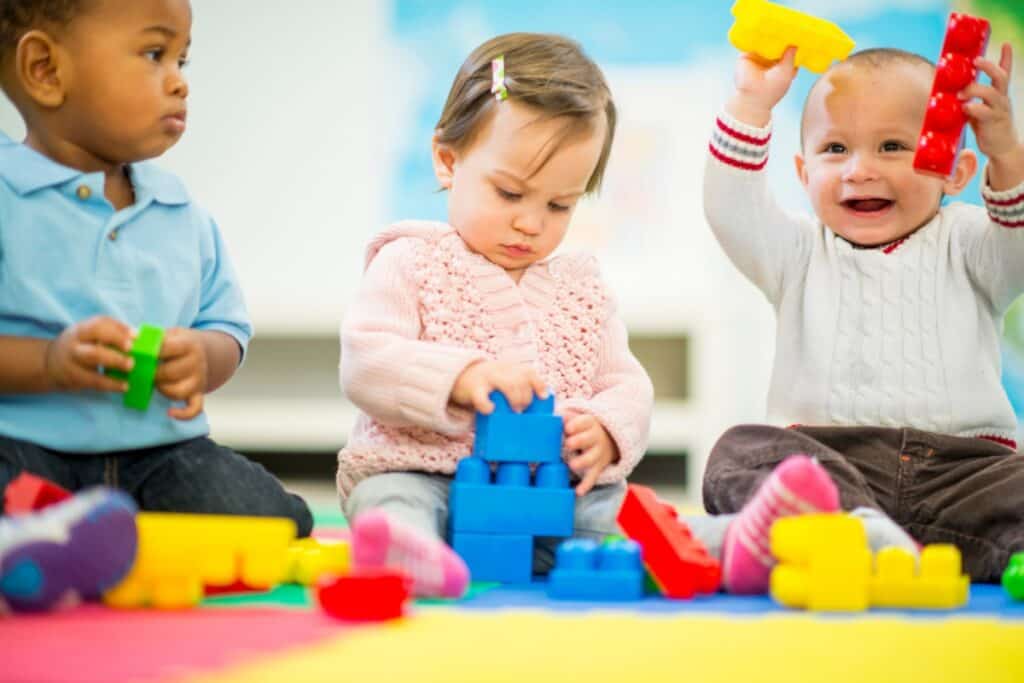
If you have a toddler, you have probably seen this before: two children sitting next to each other, both busy playing, but not actually playing together. One is stacking blocks. The other is pushing a toy car. No sharing. No teamwork. No interaction.

Believe it or not, this is a very important stage of development called parallel play. It may look simple, but it plays a big role in how young children learn to be around others and build early social skills.

Let’s break down what parallel play is, what it looks like, and why it matters so much for toddlers.

What Is Parallel Play and What Does It Look Like?

Parallel play is a stage of early childhood development, usually seen between the ages of 18 months and 3 years old. During this time, children play near other children, often with similar toys or in the same area, but they focus on their own activity instead of playing together. In other words, they are learning to be around other children before they are ready to play together.

Here are a few common examples:

  • Two toddlers building their own block towers on the same rug.
  • Children playing with different toys in the sandbox.
  • Kids coloring on their own papers while sitting side-by-side at a table.

Children may glance at each other, copy what another child is doing, or listen to nearby sounds and voices. But they are still very focused on their own play. This stage is completely normal and healthy. It is a bridge between playing alone and playing cooperatively with others later on.

Benefits of Parallel Play

  • Builds early social awareness – Children start to notice others, respect personal space, and learn what it feels like to share an environment.
  • Supports language development – Toddlers hear new words, tones, and phrases from nearby children and adults, which helps grow their vocabulary.
  • Strengthens thinking skills – By watching other children, toddlers learn new ways to solve problems and try new ideas.
  • Improves motor skills – Stacking, drawing, and moving toys help develop both fine and gross motor control.
  • Encourages emotional growth – Children learn how to focus, handle small frustrations, and enjoy independence while still feeling safe around others.

Over time, these skills help children feel more confident joining group play, sharing toys, and forming friendships.

How Caregivers and Parents Can Support Parallel Play

The best way to support parallel play is to give children the space and time to do it naturally.

Here are a few simple tips:

  • Provide plenty of similar toys, such as blocks, crayons, or cars.
  • Set up safe, shared play areas where children can play side-by-side.
  • Avoid forcing children to share or play together before they are ready.
  • Narrate what you see. For example, “You’re building a tall tower, just like your friend.”
  • Celebrate effort, not interaction. Quiet play is still meaningful play.

At our preschool, we understand how important this stage is. Our classrooms are designed to encourage side-by-side play with open spaces, shared materials, and plenty of time for children to explore at their own pace. Our teachers gently support learning by modeling kind behavior, using simple language, and allowing children to build confidence in social settings without pressure. This approach helps toddlers feel secure, capable, and ready for the next stages of social development.

To learn more about how we give children the time, space, and guidance they need to build social skills, contact us today!

Celebrating Diversity and Growing Kindness in Our Preschool

Teaching Diversity, Inclusion, and Belonging in Preschool

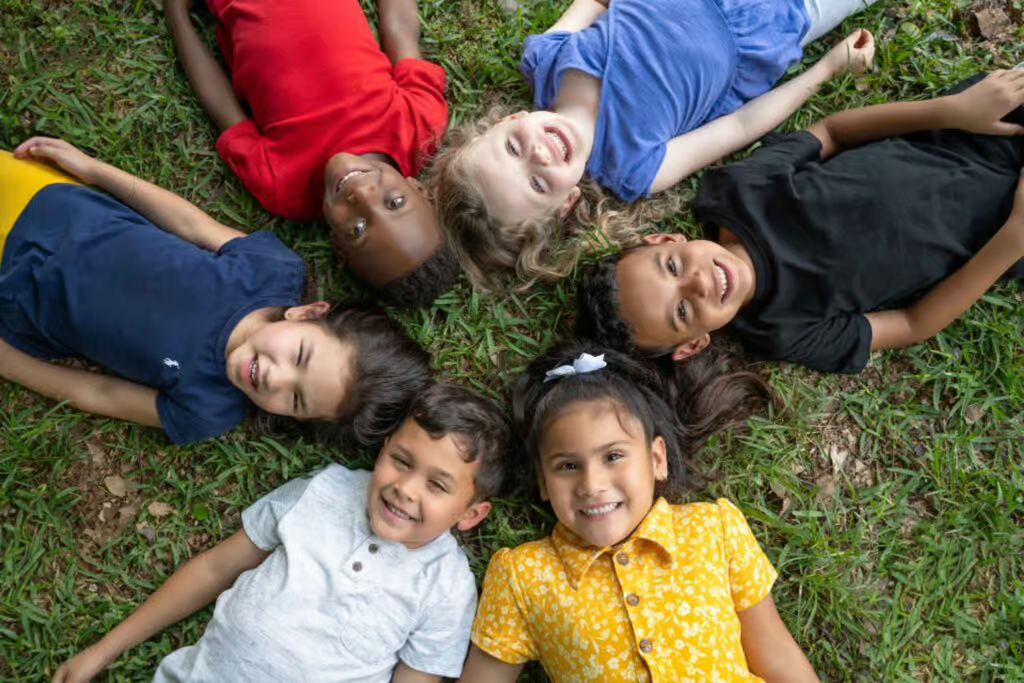
Diversity makes our world a beautiful and interesting place, and we believe it should be celebrated from the very start. At our preschool, children learn about the cultures and traditions within our own community, as well as those from around the world. When young children explore both differences and similarities, they begin to understand that while people may look, speak, dress, or live in many ways, we all share the same need for kindness, respect, and connection.

Learning about other people and ways of life helps children grow into caring, thoughtful individuals. It builds empathy, encourages curiosity, and teaches respect for others. Below are a few of the ways we bring these important lessons to life in our classrooms each day.

Citizens of the World

Citizens of the World is the social studies part of our curriculum. Through stories, pictures, discussions, and hands-on activities, children learn about different places, people, and traditions. They explore holidays, family life, and daily routines from cultures around the world. They may taste new foods, listen to folktales, or explore traditional clothing from other countries. These experiences help them build respect for others and understand that every culture has value. Over time, they begin to see themselves as part of a larger world.

Classroom Spaces That Reflect Every Child

Our classrooms are designed to help every child feel seen and valued. Our libraries include books that reflect families of many backgrounds and ways of life. Children often create class books about their families, and photos from home are proudly displayed on our walls.

When children recognize their own lives and cultures in the classroom, it helps build confidence and a strong sense of belonging. It also teaches them that while families may be different, love and care look the same everywhere. These simple touches help create a warm, inclusive community where every child feels welcome.

Learning Through the Creative Arts

Dramatic Play – In our dramatic play centers, children use their imaginations to explore the world. They dress up, take on new roles, and work together to act out real-life experiences. One day, this space might become a kitchen where students make tamales, another day an igloo in the Arctic, a Native American wigwam, or a stage for sharing important messages like those of Dr. Martin Luther King, Jr.!

Art – Our students learn about artists from many cultures and time periods, such as Alma Thomas and Vincent van Gogh. They explore different art techniques and use a variety of materials and tools to create and express their ideas. For example, they might make clay pots with play dough after learning about Japanese Raku or paint water lilies inspired by Claude Monet’s work. Students sometimes create art while listening to music from around the world, allowing the sounds to influence their art.

Music – Music is a joyful way to explore culture. Children dance to songs from different countries and try instruments from around the world. You might hear maracas shaking during a lesson about Mexico or drums playing as children learn about African music traditions.

Sharing Stories and Building Understanding

During morning and afternoon circle time, children talk about what makes them special. They share stories about their families, favorite foods, holidays, and daily routines. Listening to one another helps children learn to respect different experiences and feel proud of their own.

Growing Kind Hearts and Open Minds

When children learn about people and cultures from around the world, they become more curious and open to new ideas. They practice sharing, listening, and working with others who may be different from them. They begin to see that every person brings something special to the world.

To learn more about how we bring the world into our classrooms, contact us today!

Moving to Learn: How Activity Boosts Early Learning

Young children learn with their whole bodies. When they run, climb, and explore, they’re not just playing, they’re building a foundation for thinking, communicating, and understanding the world around them. Here’s a look at how movement impacts learning in young children.

Movement Builds Strong Bodies, and Strong Brains

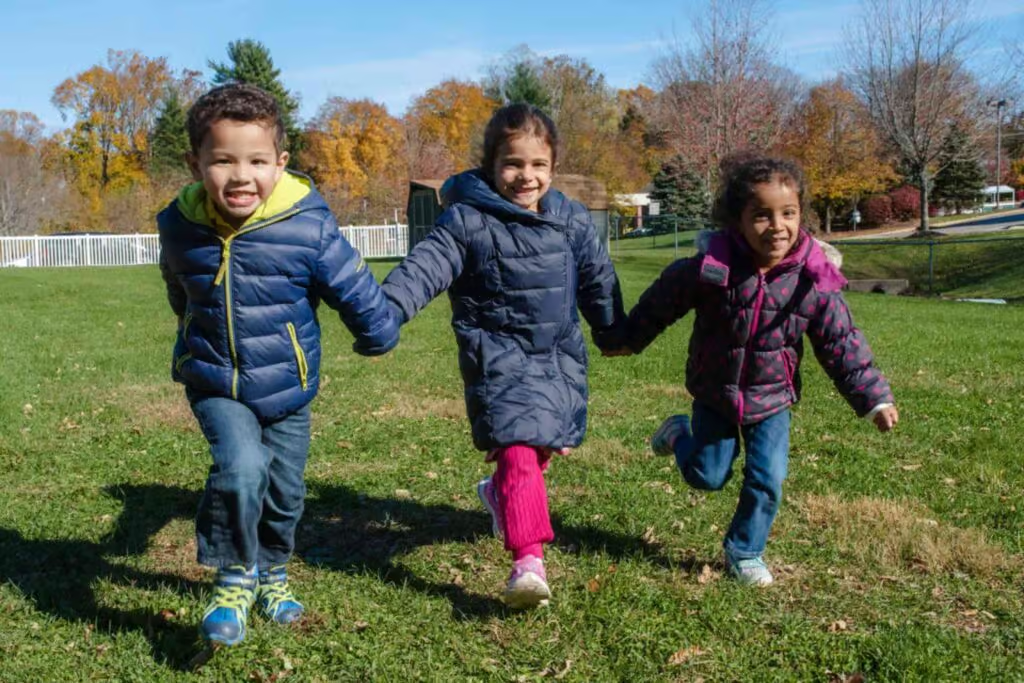
When children move, their brains grow and develop. Physical activity increases blood flow and oxygen to the brain, which helps improve focus, memory, and problem-solving skills. Each jump, crawl, or stretch helps develop brain connections that support attention, self-control, and emotional growth. Movement also gives children a healthy way to release energy, helping them feel calm and ready to learn. After moving their bodies, children are better able to sit, listen, and engage in activities.

Active Play Builds Learning Behaviors

Active play also teaches children important learning habits. When children climb, balance, or move through obstacles, they practice planning and decision-making skills. They learn to try new ideas and keep going when something feels challenging. These experiences help to build confidence and independence – skills that are important for the classroom and beyond. 

Movement Makes Learning More Meaningful

Research shows that children learn and remember more when they move while learning, rather than just listening or watching. Singing songs partnered with motions, acting out stories, and playing games like “Simon Says” make new words easier to understand and remember. Tracing letters in sand or forming letters with their bodies helps children build early reading and writing skills. Games like hopscotch help with counting, sequencing, and number recognition.

Movement is a powerful tool for learning in the early years. Whether your child is crawling, climbing, dancing, or building with blocks, they’re developing the physical and cognitive skills they need to grow and thrive. At our preschool, children are always on the move, whether they’re on the playground, dancing to music, tracing letters and shapes, or using manipulatives to explore math concepts. Movement is woven into our curriculum because when children are active, their minds are active too.

To learn more about how we incorporate movement into learning, contact us today! 

Don’t Forget About YOU: The Importance of Parent Self-Care

Being a parent or caregiver is incredibly rewarding, but it can also feel overwhelming at times. We all want to show up as our best selves for our kids, and when life gets busy, it becomes harder to stay patient and present. As we head into a new year, we want to gently remind you that taking time for yourself is not selfish; it’s essential. Even small moments to reset and recharge can make a meaningful difference. To help spark ideas, we’ve put together a list of simple self-care tips for parents and caregivers.

Leave your house

Leaving the house can feel like a lot of work with packing snacks, coats, diapers, and more, but it’s worth it. A quick trip to the store or a coffee shop can give you a much-needed change of scenery

Go for a walk

Fresh air and nature work wonders. Walking boosts your mood, energizes your body, and clears your mind. Even if it’s chilly, bundle up and go for a short stroll. You’re sure to feel a difference!

Enjoy down-time

When you get a break, try not to fill it with chores or work. Instead, use some of those moments to rest or do something that relaxes you, such as reading, watching a show, or enjoying a favorite hobby. When you find quiet moments in the morning before everyone wakes up or in the evening after bedtime, use them for reflection, gratitude, planning your day, or simply taking a breath and easing into (or out of) your day.

Make time for relationships

Schedule date nights with your partner and time with friends. Spending time with the people you love helps you feel connected and supported. Even a short getaway can lift your spirits and strengthen the relationships that matter most.

Pamper yourself

What are some little things that bring you joy? A coffee shop beverage? Getting your nails done? Watching the game on TV? While these things may seem minor, they can really boost your mood!

Prioritize sleep

Sleep deprivation can affect mood and safety. Make sleep a priority so your body has time to rest and recover. If possible, share nighttime duties with another caregiver so both of you get rest. When your child is sleeping, it’s okay for you to rest, too! While it may be tempting to stay up late watching TV or scrolling social media, you’ll likely feel the effects the next day. Our bodies need sleep for overall health, so honor that need whenever you can.

Find a preschool you can trust

When you know your child is in good hands, you can enjoy the day knowing your child is safe and loved. This allows you time to focus on work, the house, and you! While your child is at school, use that time in ways that benefit you.

Trust your gut

It’s common for other people to offer advice on how they think you should raise your child, whether it’s about sleep routines, food choices, or screen time. Often, these suggestions come from good intentions and a desire to be helpful. Remember that what works well for one family may not be the right fit for yours. Do your research, trust your instincts, and make decisions that fit your family’s needs.

Notice the little things and enjoy this time

Your children are only little once. If you find yourself in a challenging time, try to reframe it. Acknowledge their age and how their actions fit the stage they’re in. Learn to appreciate what each age offers… the cuddles of a baby, the wonder of a toddler, the determination of a 2-year-old, and the silly antics of preschoolers. Each of these fleeting stages has its own magic. 

Make this year count. Know that taking care of yourself is just as important as taking care of your children. Small moments of rest, fun, and connection can help prevent parent burnout and keep you energized for the rewarding, messy, and wonderful work of parenting. You deserve it!

Frosty Fun: Winter Traditions Your Kids Will Love

Winter is a wonderful time to slow down, enjoy cozy moments, and make memories with your children. While building a snowman and sledding are classic favorites, there are so many other ways to enjoy the season. If you’re searching for family bonding ideas for the winter, this list is sure to inspire you. These simple, engaging activities will help your family explore the season and share joyful moments together.

Snowy Night Walk

When there’s a fresh blanket of snow, bundle your family up and go on a night walk. The snow reflects the moonlight, making everything appear softly illuminated. Be sure to have your children observe how quiet the world seems. New, thick snow absorbs sound, giving the night a calm, peaceful feeling. If you have them, bring along some flashlights to examine the crystal shapes in the snow or look for animal prints.

Books by the Fire

Instead of reading books in your child’s bedroom (or, in addition to!), snuggle up with a blanket and some good books and have story time fireside. Keep the lights low or light a candle for a calming ambiance.

Living Room Movie and Camping Night

Everyone gets in their jammies and works together to set up a “camping” spot in the living room with blankets and pillows galore. Then, settle in with a good winter movie and yummy snacks or a picnic dinner. Watch movies until everyone dozes off to a good night’s sleep.

Make a Bird/Squirrel Feeder

Winter can be a tough time for our animal friends. Help your child create a simple feeder using pinecones, coconut oil or vegetable shortening as the binder, and seeds. Hang it outside and watch as the animals come to visit. It’s a hands-on activity that teaches empathy and care for animals.

Winter Baking Day

Baking together warms the kitchen and your hearts! Make snowflake or snowman sugar cookies, or celebrate your family’s culture with treats like German gingerbread, Italian panettone, Mexican conchas, or any special baked goods from wherever your family is from. Little hands can help with mixing, shaping, and decorating, turning baking into a playful, creative, and meaningful family tradition.

Make and Decorate Cut-out Snowflakes

Teach your child how to fold a square white piece of paper in half, then in half again. Encourage them to cut out triangles, squares, and circles, then open their paper to reveal their beautiful snowflake design. This is a great time to explain that every snowflake is unique, just like us! Displaying their creations as winter decor is sure to boost their confidence and bring a smile to their face.

First Snow Celebration

First snow? Get out there and enjoy it! Catch snowflakes on your tongues. Have a dance party in the snow. Then, come inside and warm up with a big cup of hot cocoa! Make it an annual tradition, and your kids will be extra excited for those first snowflakes.

Celebrate the Winter Solstice

Welcome the shortest day of the year with simple, meaningful activities. Make a solstice lantern with a jar, tissue paper, and battery-operated lights. Share a cozy candlelight dinner followed by a yule log cake for dessert. Watch the sunset, and talk about how the days will now get longer. Read books about the solstice together.

Puzzles

Winter is the perfect time to slow down and spend quiet moments together. Choose puzzles that are slightly challenging but not frustrating for your child. Leave the puzzle out on a table, island, or floor so the family can return to it over several days, making the activity last longer and encouraging teamwork.

Help Others in Need

Winter is a wonderful season to teach gratitude and kindness. Share with your child what you’re thankful for and encourage them to share, too. Then, find ways to help others. Donate clothes, coats, or blankets, participate in a food drive, visit a local nursing home, or support an animal shelter. Sharing with others not only helps your community but also teaches children empathy and generosity that can last a lifetime.

We hope these activities bring joy and connection to your family this winter. Whether you try them all or just a few, enjoy the warmth, cozy moments, and simple pleasures of this special time of year.

Musical Milestones for Infants, Toddlers, and Preschoolers

Music is one of the very first ways children connect with the world around them. From soft lullabies to lively dance songs, every beat, clap, and melody helps them explore sound, rhythm, and emotion. At our school, music is woven into our Links to Learning curriculum. Here, music is played to spark curiosity, engage the senses, explore emotion, and celebrate creativity.  Let’s explore how musical milestones unfold from infancy through preschool, and how to nurture them each step of the way.

Infants (0–12 months): The First Notes

Babies are natural music lovers! Between 0–6 months, you’ll see them react with wide eyes, smiles, or little kicks when they hear music. By 6–12 months, they start clapping, bouncing, or even shaking tiny instruments as they begin to explore sounds. 

In our infant classrooms, music is used with intention. We play songs with different tempos and encourage babies to move fast or slow to the beat. You might see a teacher gently swaying with an infant during a slow song or tapping a tambourine as babies wiggle and reach toward the sound. We play culturally diverse music from around the world, and offer safe instruments like shakers for sound exploration. Teachers often sing personalized songs like “Twinkle, Twinkle, Little Emma,” because hearing their name in song helps infants feel known and connected. 

At home: Sing simple songs or lullabies to your baby while making eye contact. Gently clap or tap along to the rhythm and encourage your baby to move along with you. Provide your child with safe, simple toys that make sounds when moved, such as rattles and soft shaker bottles.

Toddlers and Beginners (1–2 years): Finding the Beat

Toddlers love to move, bang, shake, and dance! Between 12 and 24 months, they begin to clap in rhythm, sing snippets of favorite songs, and show clear song preferences.

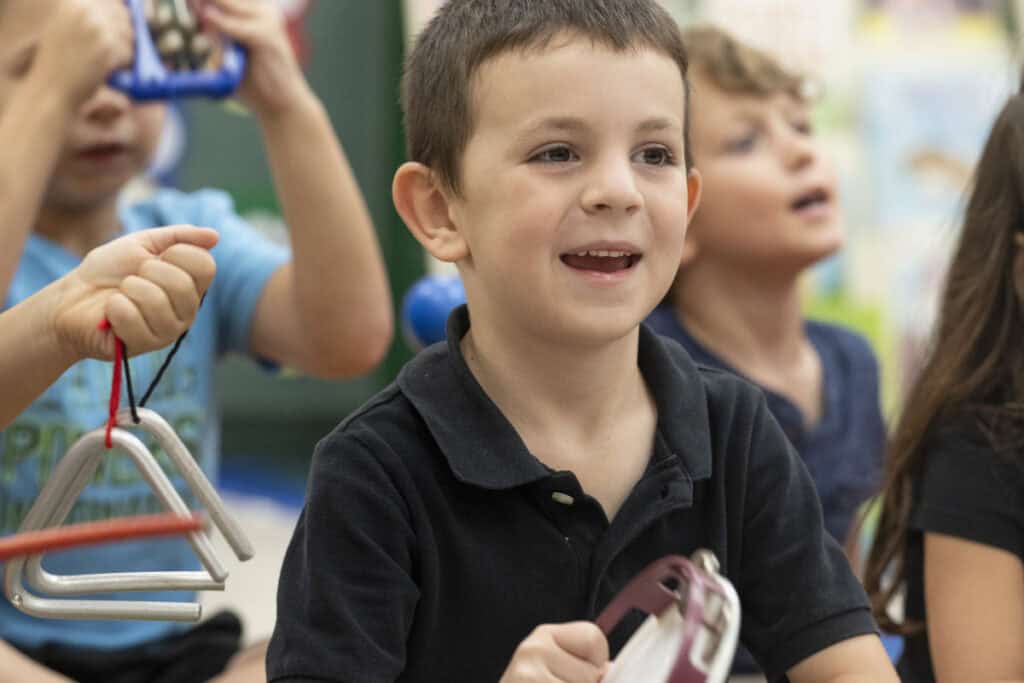
In our toddler classrooms, you’ll often hear children exploring simple instruments. Teachers name each instrument and describe what they hear: “That drum sounds loud and deep,” or “You’re shaking that so fast! Now, can you shake it slowly?” This not only supports language development but also helps toddlers understand musical concepts like volume and tempo. 

Movement is a natural part of music. Children might dance with scarves, march to a beat, or pretend to fly like butterflies. Teachers join in, showing new ways to move and inspiring imagination through music. We also connect music to stories, such as reading One Love by Cedella Marley while listening to reggae rhythms. Classic clapping games like Pat-a-Cake help build coordination and teach children to follow a steady rhythm.

At home: Give your toddler simple instruments like tambourines, shakers, or small drums and let them explore freely. Play a variety of music genres and invite them to march, sway, or bounce to the beat. Try call-and-response games by singing a short phrase and encouraging your toddler to “sing it back” or copy your claps. “If You’re Happy and You Know It” is a great example—your toddler listens, responds, and moves to your cue. For a fun twist, replace the action words with different movements or emotions to help your child connect music with feelings and self-expression.

Preschoolers (3–5 years): Making Music Their Own

For preschoolers, music becomes a tool for self-expression. Three-year-olds begin to sing along more accurately, experiment with rhythm, and dance with purpose. By age 4 or 5, they can recognize patterns in music and describe how songs make them feel.

In our Intermediates and Pre-K classrooms, we might explore the steady rhythm of The Ants Go Marching while counting, move like elephants or swirling snowflakes to classical music, or discuss how fast versus slow songs make us feel. Teachers introduce vocabulary like tempo, rhythm, and pattern as children explore music and movement, helping them describe what they hear and experience. To deepen cultural awareness, we listen to songs from around the world and invite families to share music that’s meaningful to them. Music becomes a bridge for empathy, understanding, and expression.

At home: Encourage your child to create their own music using household objects like pots, wooden spoons, or empty containers. Play music from different cultures and discuss how each one makes them feel. Try movement games like “dance like an animal” or “move fast/slow to the music” to reinforce rhythm, tempo, pattern, and body awareness. You can also sing familiar songs together and add simple hand motions or choreography to strengthen coordination and memory.

Music nurtures cognitive growth. It develops thinking, language, and motor skills while also supporting their emotions and social connections. Listening to songs, singing along, and moving to the beat helps young children notice patterns and rhythms, improve memory, coordinate their bodies, and express feelings. Through our Links to Learning curriculum, every child experiences the joy and benefits of music.

Learn more about how we help students develop musical milestones in fun, meaningful ways. Contact us today! 

  • Employer Partnerships
  • Blog
  • Careers
  • Privacy Policy
  • CA Privacy
  • Terms of Use
  • Sitemap

©2026 All Rights Reserved Spring Education Group

Headquartered in Campbell, California, Spring Education Group is majority-owned by investment funds administered by Primavera Holdings Limited, an investment firm owned by Chinese persons and principally based in Hong Kong with operations in the United States, China and Singapore.

Follow Us:
youtube facebook instagram
Contact Us