• Skip to primary navigation
  • Skip to main content
Discovery Isle
  • About Us
    • History
    • Locations
    • Private Preschool Advantage
    • Health & Safety
    • Blog
  • Preschool
    • Overview
    • Our Curriculum
    • Family Communication
    • Infants
    • Toddlers
    • Beginners (2-3 yrs)
    • Intermediates (3-4 yrs)
    • Pre-K
  • Camp & After School
    • Summer Camp
    • Before & After School
Contact Us
 
  • About Us
    • History
    • Locations
    • Private Preschool Advantage
    • Health & Safety
    • Blog
  • Preschool
    • Overview
    • Our Curriculum
    • Family Communication
    • Infants
    • Toddlers
    • Beginners (2-3 yrs)
    • Intermediates (3-4 yrs)
    • Pre-K
  • Camp & After School
    • Summer Camp
    • Before & After School
Contact Us

esemans

Joyful Learning and Strong Foundations: Week of the Young Child at Our School

Every April, our school proudly celebrates Week of the Young Child. This meaningful event, hosted by the National Association for the Education of Young Children (NAEYC), recognizes the importance of early childhood education. It is an opportunity to honor the families and teachers who help children learn and grow each day. During this week, children enjoy activities that spark creativity, curiosity, and learning. By celebrating, we are reaffirming and recommitting our responsibility to ensure every child gains early learning experiences that build a strong foundation for the future.
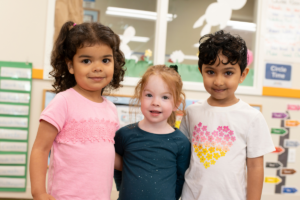
The activities we engage in during Week of the Young Child highlight the everyday experiences we offer, all grounded in our Links to Learning curriculum. Each day has a unique theme that helps children build new skills in exciting, hands-on ways. Here are some of the ways we celebrate in our school:

Music Monday

On Music Monday, children sing, dance, and play instruments. They listen to music spanning different genres and cultures, moods, and tempos. Students have fun clapping along to the beat, moving their bodies to the rhythm, singing along with songs, and playing instruments – some made in class! These activities help them develop language and literacy skills, recognize patterns, and boost their creativity.

Tasty Tuesday

Tasty Tuesday is all about food! Our students mix, measure, and try new flavors while learning about math and science. They also discuss healthy eating habits and practice table manners like saying “please” and “thank you” and cleaning up after meals. 

Work Together Wednesday

Work Together Wednesday strengthens collaboration and community in the classroom. Our students are encouraged to share ideas, solve problems, and work together to build, create, and play games. These activities help children practice kindness, respect, and teamwork while recognizing the unique strengths of their classmates. By working toward a common goal, they build confidence, form meaningful connections, and see firsthand how cooperation makes a big difference. 

Artsy Thursday

Our students become little artists on Artsy Thursday! Children use materials such as chalk, paint, and clay in fun ways. They might spray paint with water bottles, mold clay into 3D designs, or create works of art inspired by famous artists. These activities help children use their imagination, develop small muscle strength, and build confidence. Our teachers focus on the joy of creating, not just the final piece!

Family Friday

On Family Friday, students share pictures and stories about their lives and traditions, helping them learn what makes each family special. We believe working together with families helps children learn and grow, so we celebrate the different cultures in our community through books and discussions, helping children develop a deeper understanding and appreciation for diversity.  Since school is like a second home, Family Friday is also a time to celebrate our school family! We invite our families to join in special celebrations with us. 

Week of the Young Child highlights the importance of early learning and the joy of discovery. We love celebrating this special week and the families, teachers, and communities that help our students thrive.

To learn more about how our Links to Learning curriculum and dedicated teachers support our students academically, socially, and emotionally, contact us today!
10 Books to Read With Children in Honor of Hispanic Heritage Month

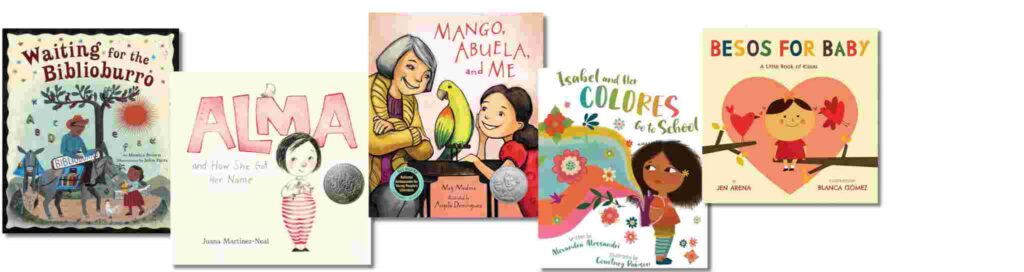
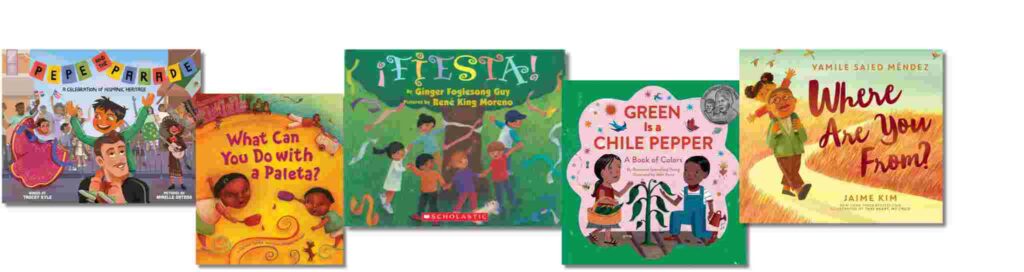
We’re celebrating Hispanic Heritage Month with our curated list of books that both entertain and educate. Books are a wonderful way to celebrate and honor Hispanic heritage, offering young readers a window into vibrant traditions, languages, and history of Hispanic Americans. From imaginative tales and family-centered stories to playful adventures, these ten books are sure to capture young imaginations and deepen their understanding of Hispanic culture. 

Waiting for the Biblioburro by Monica Brown

In this picture book, readers are introduced to Ana, a young Colombian girl passionate about reading but lacking access to new books. Fortunately, librarian Luis Soriano arrives in her village with a collection of books carried by his two donkeys, aptly named Alfa and Beto. This heartwarming tale, inspired by a real-life traveling librarian, weaves Spanish words into its narrative, emphasizing the universal value of reading. 

Alma and How She Got Her Name by Juana Martinez-Neal

Alma Sofia Esperanza José Pura Candela thinks that she has way too many names, but as she learns more about how her names connect her to her family, Alma becomes very proud of them.

Mango, Abuela, and Me by Meg Medina

When a little girl’s grandmother comes to stay, love and patience transcend language in a tender story that speaks loud and clear about learning new things and the love that bonds family members. 

Isabel and Her Colores go to School by Alexandra Alessandri

This charming story follows Isabel on her first day of school. Packed with vibrant imagery, this story affirms the experiences of English language learners while encouraging empathy for others. Readers will root for Isabel and her colorful new beginning.

Besos for Baby: A Little Book of Kisses by Jen Arena

Using simple Spanish words, this charming read-aloud proves that love is the same in every language. Families won’t be able to resist giving their baby muchos besos as they read this book!

Pepe and the Parade: A Celebration of Hispanic Heritage by Tracey Kyle

With new food to taste, music to dance to, and a parade to watch, Pepe couldn’t be more excited to attend his first Hispanic Day parade. Children will delight in seeing many Hispanic countries and cultures proudly honored in this joyous board book. With joy and pride, as well as language immersion, Pepe and the Parade is a jubilant celebration of culture and identity.

What Can You Do with a Paleta? by Carmen Tafolla

What Can You Do with a Paleta? is a fun children’s book about a girl who eagerly waits for the paleta (popsicle) wagon in her colorful neighborhood. It’s a celebration of cultural diversity and the joy of street vendor treats. The book invites children to imagine all the fun things they could do with a paleta.

Fiesta by Ginger Foglesong Gay

In this colorful bilingual counting book, three children prepare for a birthday party with a visit to the market. Their search for games, toys, candy, and other trinkets culminates in the making and breaking of a festive piñata.

Green is a Chile Pepper: A Book of Colors by Roseann Thong

Through vibrant illustrations and rhyming text, this book encourages children to explore colors through objects that are often Latino in origin. 

Where are You From? by Yamile Saied Mendez

This picture book is about a little girl who is repeatedly asked “Where are you from?” Feeling left out, she seeks the counsel of her abuelo (grandfather). Instead of giving her the response she expects, she gets an even better one. The story celebrates having a positive self-image and pride in your identity. 

Visit our Links to Learning page to learn more about our literacy-rich curriculum and how we cultivate an inclusive environment where every child feels valued, welcome, and empowered.

15 Questions to Ask Your Child Instead of “How was School?”

After a long day, you’re probably excited to hear all about your child’s day at preschool. Simply asking “How was school?” may not yield the detailed report you were hoping for. Children will usually respond with “fine” or “okay” leaving you wanting to know a bit more about your child’s day. If you’re searching for some good questions to ask instead, we’ve got you covered. Here is our list of fun, open-ended questions to ask your child.

  • – Was there an activity or game you played that you enjoyed?
  • – What was the best thing that happened at school today?
  • – What made you feel happy or laugh today?
  • – Did anyone do something kind for you, or did you do something kind for someone else?
  • – Did anything make you sad today? Can you tell me about it?
  • – What was the hardest part of your day?
  • – What are you looking forward to at school tomorrow?
  • – Can you please tell me about a book or story you heard today?
  • – What did your teacher talk about at Circle Time today?
  • – Who did you play with today, and what did you play?
  • – What did you eat today? Did you like it?
  • – Can you tell me about a picture you made today?
  • – What did you do on the playground today?
  • – Were you brave today? How?
  • – Is there anything you want to talk about from your day that you haven’t mentioned yet?

Bonus Tips
  • Utilizing our Links 2 Home Parent App, educate yourself on your child’s school day and events. Integrate this information into your questions. For example, if you learn that every Wednesday is Water Play Day or your child has a special event at school, ask specific questions about that. 
  • Integrate your child’s interests into your questions. For example, if your child loves insects, you might ask what kinds of bugs they saw on the playground that day. 
  • Some children will not want to share details right after school. You may find that your child is more willing and better able to share information during dinner or at bedtime.

Our list of questions can help you better understand your child’s social interactions, academic experiences, and emotional responses to school life. The key is to listen actively and show genuine interest in their responses. By asking these questions consistently, you’ll create opportunities for meaningful conversations that strengthen your bond and support your child’s overall development. 

Creative Activities to Build Your Child’s Vocabulary

Building a strong vocabulary is not only essential for academic success, but also enhances a child’s ability to express themselves effectively and understand the world around them. While traditional methods like reading aloud together are invaluable, integrating creative activities can make the process of learning new words fun and engaging for children. Here are some creative activities you can try with your child at home.

Storytelling Sessions

Encourage your child to create and narrate their own stories. This strengthens their imagination and allows for opportunities to try out new vocabulary. Allow for plenty of silliness and wild ideas! Giving freedom to openly express their ideas will build their speaking confidence. Ask questions to keep their ideas flowing! Tell a story with them. You can begin with “Once upon a time…” and then take turns making up events. 

Playing Guessing Games

Classic games like “I Spy” and “20 Questions” are fun ways to build vocabulary. In “I Spy,” take turns providing clues about an object in the room using descriptive vocabulary. For example, instead of saying “I spy with my little eye… something pink,” you could say “I spy with my little eye… something brightly colored that bees like to land on.”  In “20 Questions,” think of a word and let your child guess it by asking yes or no questions that require descriptive answers. Get them started by narrowing down the topic. “What I’m thinking of is something I use in the kitchen.” 

Reciting Nursery Rhymes

Nursery rhymes introduce children to rhyming words, alliteration, and rhythmic patterns which are all foundational for reading and vocabulary development. Many include words that are not typically in our conversational vocabulary, broadening their horizon. Some of our favorites to recite with your child are “Hey Diddle, Diddle,” “The Itsy Bitsy Spider,” and “One, Two, Buckle My Shoe.” 

By integrating these creative activities into your child’s daily routine, you can make vocabulary building an enjoyable and enriching experience! Visit our Links to Learning page to learn more about how we integrate vocabulary-building activities into your child’s day.

How to Do Tummy Time with Your Infant 

Tummy time is a crucial activity for babies to stretch their muscles, build strength, develop motor skills, foster sensory exploration, and even aid digestion. That’s why our well-trained teachers place such emphasis on tummy time experiences in our Infant classrooms. Let’s quickly explore what tummy time is and why it’s important, then dive into best practices for doing tummy time with your infant. 

What is Tummy Time?

Tummy time refers to the practice of placing your baby on their stomach for brief periods of time while they are awake and supervised. This position encourages them to lift their head, push up on their arms, and learn to roll over, crawl, explore their surroundings and eventually walk.

Why is Tummy Time Important?

Tummy time offers a myriad of benefits for your baby’s development:

  1. Strengthens Muscles: By lifting their head and pushing up on their arms, babies strengthen their neck, shoulders, arms, and core muscles.
  2. Promotes Motor Skills: Tummy time helps babies develop the coordination and strength needed for head control, rolling over, crawling, and eventually sitting up, standing, and walking.
  3. Prevents Flat Spots: Spending time on their tummy lessens the chances of developing positional plagiocephaly or “flat head syndrome.” This is when babies’ heads form flat spots from spending too much time on them. Remember, while we don’t want babies spending all their time on their backs, sleeping babies should always be on their back to help reduce the risk of SIDS. 
  4. Enhances Sensory Exploration: Being on their tummy allows babies to explore their environment from a different perspective and use their hands to feel the textures surrounding them.
What is the proper way to do tummy time?

Newborns: It is best to begin tummy time as early as possible.You’ll start by placing your baby on their tummy for 3-5 minutes a few times each day. Be sure to lay them on a firm surface such as a play mat or blanket on the floor. Avoid beds or other furniture they could fall off of, as well as pillows or soft bedding which can pose a suffocation risk. Never leave your baby unattended during tummy time. Provide gentle support by placing a rolled-up towel under their chest or use a nursing pillow for added elevation. Some babies dislike tummy time and that’s okay. Allow them to fuss, but be there to comfort them during these brief moments. The earlier you begin and more frequently your baby partakes in tummy time, the easier it will be. 

A great way to ensure your child is receiving adequate amounts of tummy time and strengthen your bond with them is by doing tummy time on you! Lay your child stomach-down on your chest, facing you. Talk or sing to your child and simply enjoy this special time together.

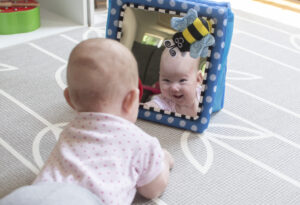
2-4 months: Babies are gaining more head control and may be ready to give up the blanket or towel underneath them. Babies are becoming more aware of their surroundings and can endure longer periods on their tummies. Their vision is improving, so provide them with stimulating materials. In our classrooms, we provide sensory bottles, books with black and white or contrasting colors, mats with various textures, and mirrors to encourage self-discovery. Whenever you can, get down on the floor with your baby! They never get tired of seeing you. By 4 months old, babies should spend 10-15 minutes on their tummies at least three times per day.

4-6 months: Now tummy time is getting fun! During this stage, your baby’s core strength is greatly developing and your baby might start rolling over! You’ll want to provide toys, soft books, and other interactive elements that they can try to grasp, hold, and shake. Our Infant Program teachers can be found having lots of conversations with their students as well as encouraging them to reach for toys and roll over during this tummy time stage. 

6 months and older: Continue increasing the amount of time your baby spends on their tummy, working up to a combined full hour each day. This stage is when babies may begin pushing up on hands and knees and even start crawling. When we see this in our classrooms, our teachers provide encouragement and praise. Additionally, they will often put desired objects a short distance away to try to encourage the child to crawl to it. Once they master this milestone, watch out! They’re on the go!

Bonus Tips: 
  • If your baby ever falls asleep during tummy time, it is best to turn them over to their back and lay them in their crib.
  • Do tummy time during periods of the day when your child seems to be happiest.
  • Take tummy time outdoors for a change of scenery. Set up a blanket in the shade and let your baby explore the sights and sounds of nature.
  • Include siblings. Ask your older children to talk and play with your baby to keep baby happy and strengthen their bond. 
  • As you embark on the tummy time journey with your infant, remember that each baby develops at their own pace. With patience and dedication, tummy time will be a success.

Our engaging Links to Learning Infant teachers work patiently and lovingly with their students to provide the support and encouragement necessary for tummy time success. To learn more about our Infant Program, contact us/find a school today! 

5 Easy Ways to Help Your Child Build Self-Esteem with Erin Pastushok

Learn how to build your child’s self esteem with Erin Pastushok, our Director of Educational Services. Erin joined our organization in 2009 and has been part of our Education Team for 8 years. With nearly three decades of experience in early childhood education, Erin has worn various hats, including that of a teacher, inclusion specialist, principal, and now an integral part of our Education Team. She is a certified Infant, Toddler, and Family Specialist through the North Carolina Infant Toddler Program, as well as a certified Trainer through the Center on the Social and Emotional Foundations for Early Learning (CSEFEL).

Hi Erin! How does self-esteem play a role in the success of young learners?

Erin: Children with healthy self-esteem have the confidence to try new things, even if they might fail. They are able to cope when they make mistakes and will even try again.  Confident children are able to assert themselves and have the confidence to ask for help when needed. All of these are helpful attributes when it comes to learning new skills and information. Self-esteem is closely linked to academic performance. Students with high self-esteem tend to perform better academically because they are more likely to set higher goals, work diligently, and seek help when needed. Positive self-esteem enhances social skills and relationships with peers and teachers. Students with high self-esteem are more likely to participate in classroom discussions, collaborate with classmates, and develop supportive friendships. 

How can we recognize if a child has low self-esteem? 

Erin: Children with low self-esteem may talk negatively about themselves, saying things like, “I can’t do that,” “I don’t know how,” or “My hair isn’t nice like hers.” These children might avoid social situations and have a difficult time moving past simple mistakes, becoming easily upset if they cannot do something or feel that they did something wrong. Low self-esteem can lessen a student’s desire to learn, ability to focus, and willingness to take risks. 

It sounds like having healthy self-esteem is influential in a child’s success both academically and socially. Can you share five ways caregivers can help children build self-esteem?

Erin: Gladly! While there are many ways to help a child build confidence, I find these tactics to be successful. 

  1. Be a positive role model. Take on challenges with a can-do attitude. Allow your child to see you make mistakes, then recover from them and try again in good spirits. Encourage your child to view their own mistakes as opportunities for learning and growth. Celebrate your successes with them and let them know that your accomplishments didn’t come easy, but were worth the effort. 
  2. Encourage your child to tackle challenges and praise them for their efforts. Let’s say you would like your child to zipper their coat but your child won’t try, stating that “it’s too hard.” Gently offer to show them how to line up the zipper a few times, then ask them to try. Even if your child can’t accomplish this, be sure to praise them for their effort. Stay calm and reassure them that with practice they will succeed. Of course, celebrate their success when it happens! It is important to offer specific praise that focuses on their actions and qualities rather than generic compliments. For example, instead of saying “Good job,” you might say, “I noticed how hard you worked on zipping your coat. You were so patient and determined!” If a task seems too overwhelming for your child, like cleaning their playroom, it is helpful to break the task into manageable steps. You could have them start by putting their cars away first, then their action figures.
  3. Show love. Of course you love your child, but life can get hectic and children can feel unimportant if their emotional needs are not being met. Make sure you are telling your child daily that you love them (or even 100x a day!) and mention things that are special about them. “I love how creative that picture you drew is!” “Did you know that you give the best hugs?” “I was so impressed when you climbed the steps all by yourself on the playground today.” Be sure to make time for your child and then say things like, “Thank you for playing with me earlier. I loved it!”  Additionally, celebrating their individuality will help them love themselves and boost their esteem.
  4. Let kids help and give to others. Self-esteem grows when kids see that what they do matters to others. Allow your child to help you cook and clean. Do they have a younger sibling? Include them in their care. Do you have a neighbor or friend that needs some cheering up? Ask your child to help you pick out flowers to take to them. Helping others and participating in acts of kindness builds self-esteem and other good feelings.
  5. Allow kids to fail. I know this last tip might surprise you, but I do recommend it. It’s natural to want to protect your child from failure, but trial and error is how kids learn. By always doing things for our children or not letting them take risks, we are in turn teaching them that they cannot or are not good enough. Encouraging risk-taking is an impactful way to build self-esteem. 

Building self-esteem is a journey that requires patience, consistency, and unconditional love. With your support and guidance, your child can grow into the confident and resilient individual they are meant to be.

Ways to Turn Tantrums into Teachable Moments

Tantrums are a common occurrence in childhood, often leaving caregivers feeling frustrated and overwhelmed. But what if we could turn these challenging moments into valuable opportunities for learning and growth? By approaching tantrums with patience and empathy, we can turn them into meaningful teachable moments that foster emotional intelligence, problem-solving skills, and self-regulation in children. Our Links to Learning teachers employ effective strategies to do just that. 

Validate and Label Emotions

Our patient and dedicated teachers acknowledge that feelings matter. Even if we’re not sure why a child is upset, we let them know it’s okay to feel frustrated. By validating their emotions, we help them feel understood and supported. At home, remember to get down to their level for a more meaningful connection.

Talk When Calm

It’s hard to reason with a child in the heat of the moment. With their heightened emotions, it is difficult for them to process what you may be saying. Our teachers approach each conversation calmly and ask students open-ended questions. This approach helps them process their emotions and learn from the experience.

Encourage Problem-Solving

We empower our students to find their own solutions by offering choices and alternatives. This helps them develop critical thinking skills and a sense of autonomy. At home, you could ask your child, “Instead of screaming, what could you have done differently?”

Foster Empathy and Understanding

We teach our students to recognize not only their own emotions but also those of others. By considering how their actions impact those around them, they learn compassion and social awareness. At home, you could ask, “How do you think Bobby felt when you were screaming?”

Instill Life-Long Benefits

These teachable moments have a lasting impact on children’s emotional development. When met with empathetic and constructive responses, they develop healthier coping mechanisms, higher emotional intelligence, and better communication skills for kindergarten and beyond.

Additional Tips:
  • Know your child’s triggers and prepare for them.
  • Set boundaries ahead of time to manage expectations.
  • Equip your child with coping strategies, such as deep breathing or a calming sensory item.
  • Create a safe space at home for them to calm down and regroup.

By embracing tantrums as opportunities for growth, we empower our children to navigate their emotions and thrive emotionally and socially.

How Long Should My Toddler Nap?

Children need adequate sleep to rest their bodies, consolidate new information, improve their mood, and even reduce risk of injury. Naptime helps to ensure that they get the recommended amount of sleep to achieve this.

As your child moves from the infant stage to toddlerhood, they won’t need as much sleep as they used to, though they do still need to nap. But how long should a toddler’s nap be? *We will be referring to children between the ages of 1-2 as toddlers. 

How much sleep does my toddler need and how much of that should be allocated to naptime?

Toddlers should receive 11-14 hours of sleep each day. This includes both their nap and nighttime sleep. Most children by age 14-18 months will begin to need only one afternoon nap between 1.5 to 3 hours long. You’ll know your child is ready to move to a single nap schedule as the two naps per day become a struggle, your child “fights” you to go to sleep, and naps become shorter.

Setting the stage for naptime

Provide your toddler with a set naptime routine at home (i.e., lunch at 11:30 am and nap at 12:30 pm). Cues such as a sound machine, a fan, or soft music can help relax your child. Allow your child to sleep until they wake naturally unless they begin to sleep so long that it interferes with bedtime. Sleeping longer than 3 hours for a nap is not recommended at this age.

In our Links to Learning Toddler classroom, students receive a fresh diaper before transitioning to their afternoon nap. We provide visual cues by dimming the lights and audio cues with soft music. This set schedule and routine provides a sense of security and familiarity for our students, so they know it is time to rest and they feel comfortable doing so. 

Do what’s best for your family

The key takeaway is that toddlers should receive 11-14 hours of sleep each day. If your child takes a 2-hour nap, their bedtime should be between 7:30-9:00 pm. Every child’s sleep pattern is different. One child might sleep closer to 9 hours/night and take a 3-hour nap while another child might average 12 hours of sleep/night and take a 1.5-hour nap. Do what works best for your family. There is no right or wrong bedtime or naptime.

Helpful Tips

You’ll know your child is receiving enough sleep if they are happy shortly after waking and not showing signs of sleepiness or frequent irritability throughout the day. Follow your toddler’s cues, provide a safe and familiar environment, and ensure that your child is receiving 11-14 hours of combined sleep. If you do these three things, your toddler’s naptime will likely be just what they need.

If you’re curious about other ways our Toddler program helps children develop, find a school today. 

How to Reinforce Literacy Skills During Your Child’s Day

Learn how to give children the best head start in gaining literacy skills with Jodi Schreck, our Executive Vice President of Education. Jodi joined our organization in 1997 and leads our Education team. Jodi has served as teacher, trainer, and leader in the public and private school sectors. Her 35 years of experience spans early childhood, K12, special education, and education leadership.

Hi Jodi! Why is it crucial to start reinforcing literacy concepts in early childhood? 

Jodi: During the early years, children soak up knowledge like sponges! It is at this time that the brain is making a myriad of connections. It’s amazing how much they can learn and remember. Early exposure to language and literacy sets the stage for success. Our youngest learners are listening all of the time, building their auditory vocabulary, learning sounds within words, and making meaning of words. Soon, they connect sounds to printed letters. Children immersed in environments abundant with language typically demonstrate heightened speech aptitude and enhanced phonics skills.

How do our teachers create a literacy-rich environment in their classrooms? 

Jodi: Our teachers promote communication skills and early literacy skills as they talk with, read to, and sing along with their students. Students learn that reading and writing are important as they see their teachers using these skills in everyday life. As teachers share various forms of literature, they model fluent reading, how to get questions answered, and comprehension strategies. They develop students’ love of writing by providing opportunities for them to convey their ideas within authentic writing tasks.

Our students have opportunities to “read the room”. An environment filled with printed words introduces vocabulary and helps students construct meaning. Our classrooms are filled with books, calendars, weather charts, classroom job charts, and more. Everywhere they look, students can see printed text. 

How can families create a literacy-rich environment at home?

Jodi: Place books not only in your child’s bedroom but also in other areas of the home, such as the living room and kitchen. Children often learn through observation, so the more they witness their parents reading, the more likely they are to explore books themselves. Chore charts, weekly menus, or morning/bedtime schedules can also be beneficial. Ensure these visuals contain both pictures and words and involve your child in reading them together. When you read to or with your child, track words with your index finger and allow your child to explore certain words, sounds, or phrases. Make age-appropriate magnetic letters, alphabet puzzles, writing materials, and paper easily available for your child. These are all fun ways to further encourage literacy exploration.

How can families incorporate literacy into daily routines?

Jodi: Regular reading sessions, particularly stories at bedtime, effortlessly introduces literacy into the home and strengthens the parent-child bond. If age-appropriate, ask your child to recall events or parts of the story. This helps children recognize that stories have a beginning, middle, and end.

While cooking, ask your child to “read” you the name of familiar foods in your pantry and refrigerator. You can also provide empty food containers in their play areas, name the items for them, and ask them to name them. 

Simply engaging your child in conversation and asking them to tell you a story is such a powerful tool for strengthening their speaking skills. Even toddlers have plenty to say when you ask them. Although it may sound like gibberish, play along with the conversation! 

In your experience, what are some of the most rewarding outcomes you’ve seen when children are engaged in literacy-focused activities at a young age?

Jodi: One of the most rewarding outcomes is witnessing a child’s newfound confidence and excitement for learning. When children discover the joy of reading and writing, it ignites a passion for learning that stays with them throughout their educational journey. 

I’ve also seen how literacy activities help children develop essential communication skills, such as expressing themselves clearly and understanding others’ perspectives. As children immerse themselves in stories, they learn to articulate their thoughts and emotions in a way they couldn’t before.

Are there specific types of books that are especially beneficial for young children?

Jodi: Look for books with illustrations of familiar things, actions, and events in your child’s life. Simple and vibrant board books are best for our earliest readers. As your child enters toddlerhood, you can hone in on their interests and reading books about those. For example, if your toddler loves the garbage truck or mail carrier, read books about vehicles or community jobs. If your child loves their dog, find books about this special bond. Rhyming books, books with repetitive text, and books with predictable outcomes are common favorites.

Don’t underestimate the value of reading your child’s favorite book over and over again! In addition to the power of bonding, predicting events and patterns within language, and vocabulary building, are some of the other benefits that come with recycling words. Words never get old!

How to Stop My Toddler from Biting

When your toddler bites, it can be worrisome for a parent. Rest assured, biting is a natural and common behavior that will pass. Biting can begin in infancy and continue through the preschool years, but toddlerhood is when it is most prevalent. Before we dive into how to stop a toddler from biting, let’s take a step back and explore why this behavior may be occurring. 

Why is my toddler biting?

  1. Teething – Teething can be uncomfortable and painful. Biting provides instant, yet temporary relief.
  2. Expression – Most toddlers have not yet developed the verbal skills to communicate their needs, wants, and emotions. Biting can be their way to express themselves.
  3. Attention – A child may seek attention by biting, especially when they are not provided with enough stimulation, interaction, and developmentally-appropriate materials and activities.
  4. Defense – A child may bite if they are hurt by another child or feel threatened; for example, another child is trying to take away their toy.

How do preschools prevent biting in the classrooms?

To prevent biting in a classroom setting, teachers implement a structured daily routine to provide their students with a sense of security while keeping them occupied with stimulating activities. In our Links to Learning Toddler program, we make sure classrooms are filled with engaging, developmentally-appropriate toys and activities to keep our students engaged and learning. Our students are free to explore independently and make choices.

Creating a language-immersive environment where students can practice effectively and positively communicating their needs is also key for preventing biting behaviors. Our teachers implement language into everything they do. They “forecast,” or describe what they are doing, and what they see our students doing. Our students can expect conversations during play, mealtimes, diaper changes, and more!

How can I prevent biting at home?

Try to keep your child on a regular schedule for sleeping, eating, and playing. Provide ample playtime and stimulating materials. Use words to convey emotions when you recognize them in your child so that they can begin labeling emotions as well. You can also look at picture books with your toddler of children experiencing various emotions and label them together. If your child is teething, be sure to provide them with teething rings or the like. Please know that even with plenty of prevention methods in place, biting can still occur.

What should I do when biting occurs?

It is important to partner with your child’s teachers to ensure that behavioral guidance at school and at home are consistent. When a child bites, our teachers use a calm, firm “No” and an explanation that biting hurts. We may provide the child who bit with a type of oral soothing item and redirect them to a new activity. Our teachers may help the child understand how biting hurts by showing them the sad face of the friend who was injured and saying that they are sad.

Try incorporating these tactics at home! Keep in mind that if your child seems to have bitten to gain your attention, do not reinforce this behavior by giving it to them. Instead, direct your attention toward the injured child. Once the event has been deescalated, provide your child with scenarios on how the situation could have been handled better. Role model for them and instruct them to use simple words to express their needs such as, “please,” “mine,” or “stop.”

Discover how our experienced and nurturing teachers can support your child’s social-emotional development, including addressing biting and other behavioral challenges. Find a School today.

  • Employer Partnerships
  • Blog
  • Careers
  • Privacy Policy
  • CA Privacy
  • Terms of Use
  • Sitemap

©2026 All Rights Reserved Spring Education Group

Headquartered in Campbell, California, Spring Education Group is majority-owned by investment funds administered by Primavera Holdings Limited, an investment firm owned by Chinese persons and principally based in Hong Kong with operations in the United States, China and Singapore.

Follow Us:
youtube facebook instagram
Contact Us