August 26, 2026
Developmental Milestones
Educational Philosophy
Math & Science

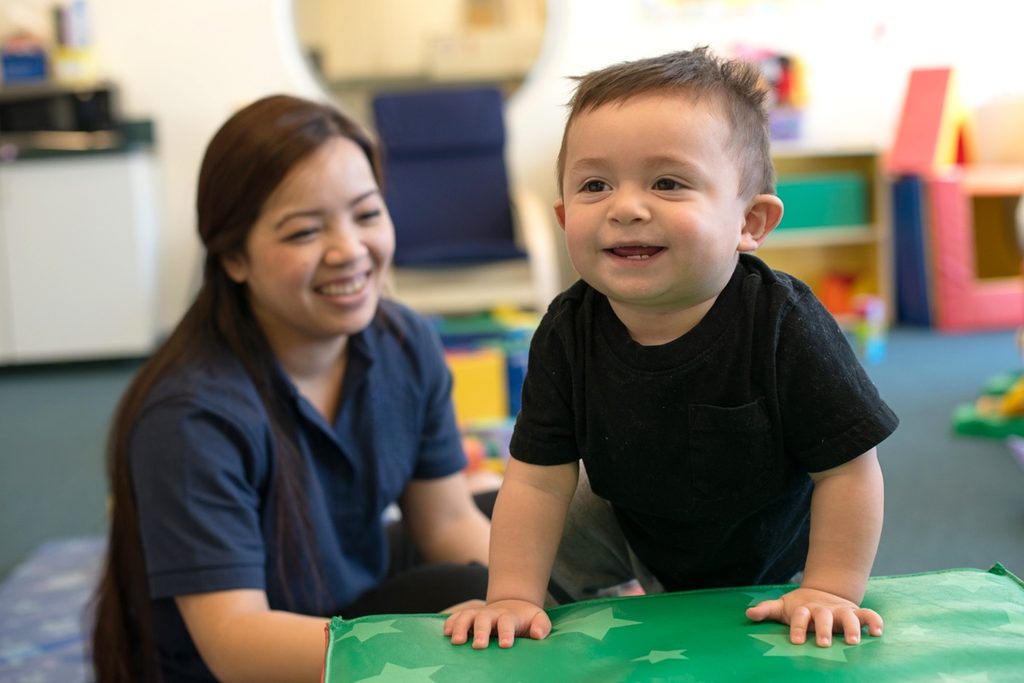
Parents and caregivers are often eager to see their baby crawl, stand, and take those first steps. While every child develops at their own pace, there are some common patterns you may notice as your baby becomes more mobile. And once they get moving, watch out! They’ll want to explore everything around them.
Below, we’ll share the key signs that your little one is getting ready to move, simple activities you can try at home to encourage their progress, and essential tips for keeping your explorer safe along the way.
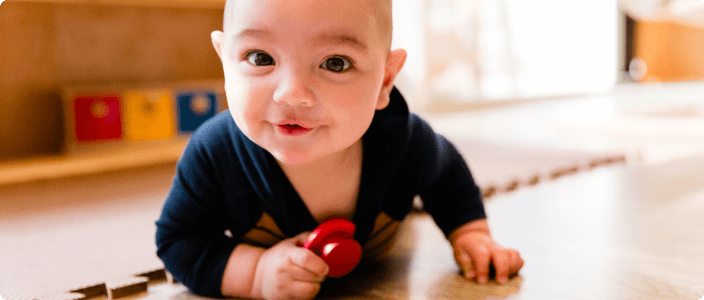
There is no exact age when babies should start crawling. The American Academy of Pediatrics (AAP) says crawling is usually mastered between 7 and 10 months, but some babies crawl earlier or later. Some babies also skip crawling and find another way to get around, such as scooting or moving on their stomachs.
Look for these signs that may signal your child will be crawling soon:
By around 9 months, many babies can sit without support and get into a sitting position on their own. These skills help build the strength and control they need for the next stages of movement.
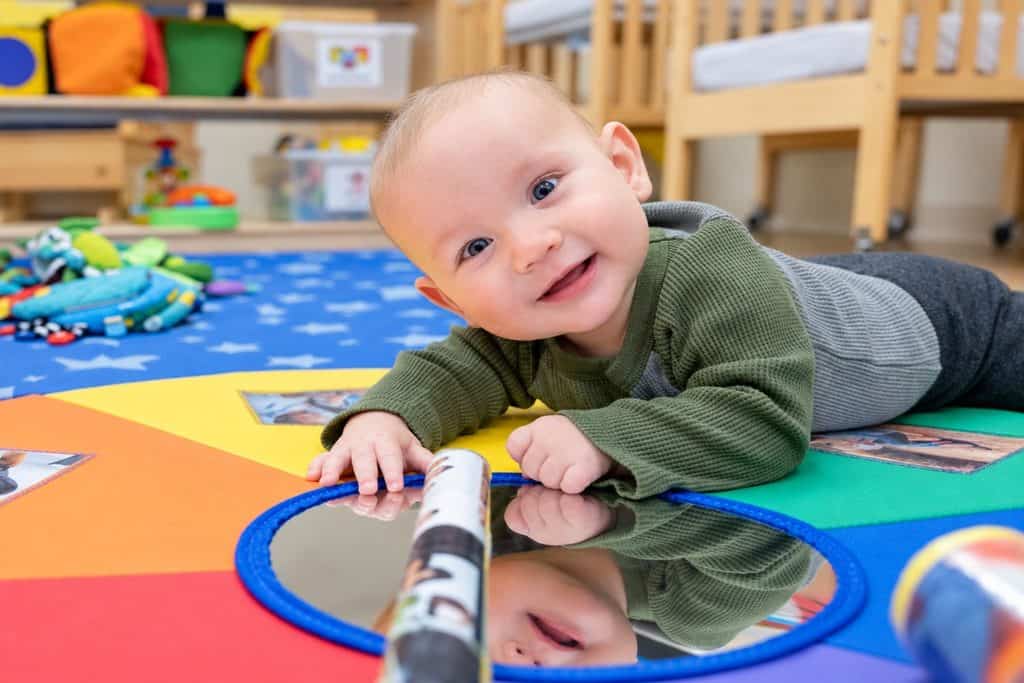
Teachers in our Infant classroom provide purposeful tummy time and use interesting materials such as mirrors, books, toys, and different textures to encourage babies to reach, grasp, kick, and move. And they’re huge cheerleaders! Kind and patient, our teachers encourage and praise babies as they make strides toward this milestone.
Some of the best ways to encourage movement are simple floor games. Place a favorite toy just beyond your baby’s reach. Give them time to reach, roll, scoot, or crawl toward it. Better yet, spend time on the floor with your baby and play alongside them. Your attention is often a bigger magnet than any toy on the market!
Firm pillows and cushions can create simple, low obstacles to crawl over as you stay close to supervise. Keep small objects and other choking hazards off the floor.
As your baby becomes more mobile, you may notice them becoming interested in standing. They may pull themselves up using furniture, then begin moving from one piece of furniture to another. This is called cruising.
These steps help your baby practice balance and strengthen the muscles they will use for walking. Around their first birthday, some babies may take a few steps on their own. Others may need more time before they feel ready.
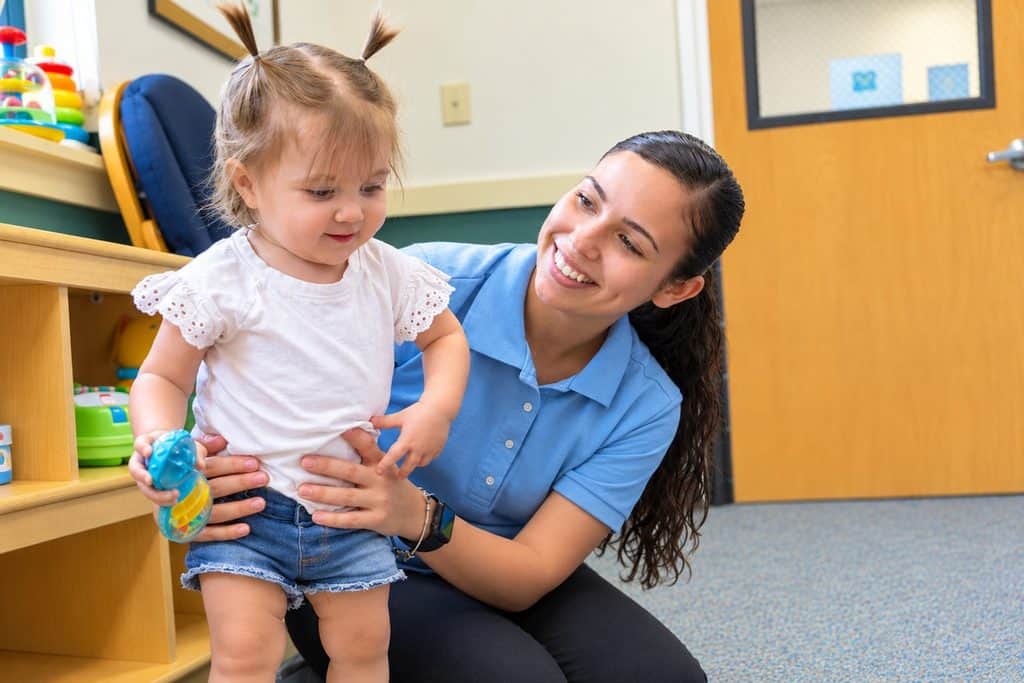
As babies become stronger and more mobile, teachers provide safe opportunities for them to practice standing, balancing, and moving independently. They may place interesting materials just out of reach to motivate babies to stand and reach for them or encourage them to move between safe, sturdy surfaces. Teachers stay close by to support babies as they practice these new skills.
Give your baby plenty of safe opportunities to move. Let them pull up on sturdy furniture and cruise along it while you stay nearby. You can also place a favorite toy on a stable surface to encourage them to stand and reach for it.
Once your baby starts taking steps, they may enjoy pushing a sturdy toy or wagon. If you use a push toy, make sure it is stable and weighted so it will not tip when your baby pulls up on it.
Side note: You may wonder if your baby needs shoes to learn to walk. Inside, babies generally do not need shoes while they are learning. When your baby begins walking outdoors, choose comfortable shoes with flexible soles and enough room for their feet to move.
Baby walkers with wheels do not help babies learn to walk and can pose serious safety risks, including falls down stairs. The AAP strongly advises against their use. Instead, stick with the activities we mentioned, which let your baby build skills at their own pace.
Once your baby starts crawling and walking, they can reach more places and get into things they couldn’t before. This is a good time to look around your home again from your baby’s point of view.
Keep small objects, medicines, cleaning products, and other unsafe items out of reach. Use safety gates at the top and bottom of stairs, and make sure furniture your baby may pull up on is sturdy and stable.
Every baby develops at their own pace. Give your little one plenty of safe opportunities to move, play, and practice. Before you know it, those first steps will lead to a whole new world of exploration!
We’d love to partner with you as your baby reaches those big milestones. Contact us today to learn more about our Infant program!
For quick tips to keep handy, print our Tips to Encourage Crawling & Walking.
You may also like: When to Start Tummy Time with Your Baby + Tips, Tricks, and FAQs