
• Skip to primary navigation
  • Skip to main content
Discovery Isle
  • About Us
    • History
    • Health & Safety
    • Locations
    • Blog
  • Preschool
    • Overview
    • Our Curriculum
    • Family Communication
    • Infants
    • Toddlers
    • Beginners (2-3 yrs)
    • Intermediates (3-4 yrs)
    • Pre-K
  • Camp & After School
    • Summer Camp
    • Before & After School
Contact Us
 
  • About Us
    • History
    • Health & Safety
    • Locations
    • Blog
  • Preschool
    • Overview
    • Our Curriculum
    • Family Communication
    • Infants
    • Toddlers
    • Beginners (2-3 yrs)
    • Intermediates (3-4 yrs)
    • Pre-K
  • Camp & After School
    • Summer Camp
    • Before & After School
Contact Us
Home / Blog / Screen Time Tips for Todd...

Screen Time Tips for Toddlers and Preschoolers

October 13, 2025
Parent Resources
Screen Time Tips for Toddlers and Preschoolers

Screens are everywhere—TVs, phones, tablets, and more. Every family handles screen time differently, and it can be hard to decide how much to allow. Setting limits is important, but sticking to them can be hard. These tips can help you keep screen time safe, healthy, and balanced.

What the Experts Recommend

The American Academy of Pediatrics suggests no screen time for children under 18 months. For children ages 2 to 5, the recommendation is no more than one hour a day, and only high-quality programs.

The Impact of Screen Time in the Early Years

The first five years are a critical time for brain growth. Children learn best through play, conversation, and real-world experiences. Too much screen time can interfere with sleep, attention, and social development. That’s why it’s important to balance screens with active play and family time.

Tips for Managing Screen Time

Here are some ways to keep screen use safe and positive if you choose to include it in your child’s routine:

  • Choose high-quality content. Opt for educational shows, games, or apps that encourage problem-solving, creativity, or learning. Public broadcasting and trusted child development organizations often share reliable recommendations.
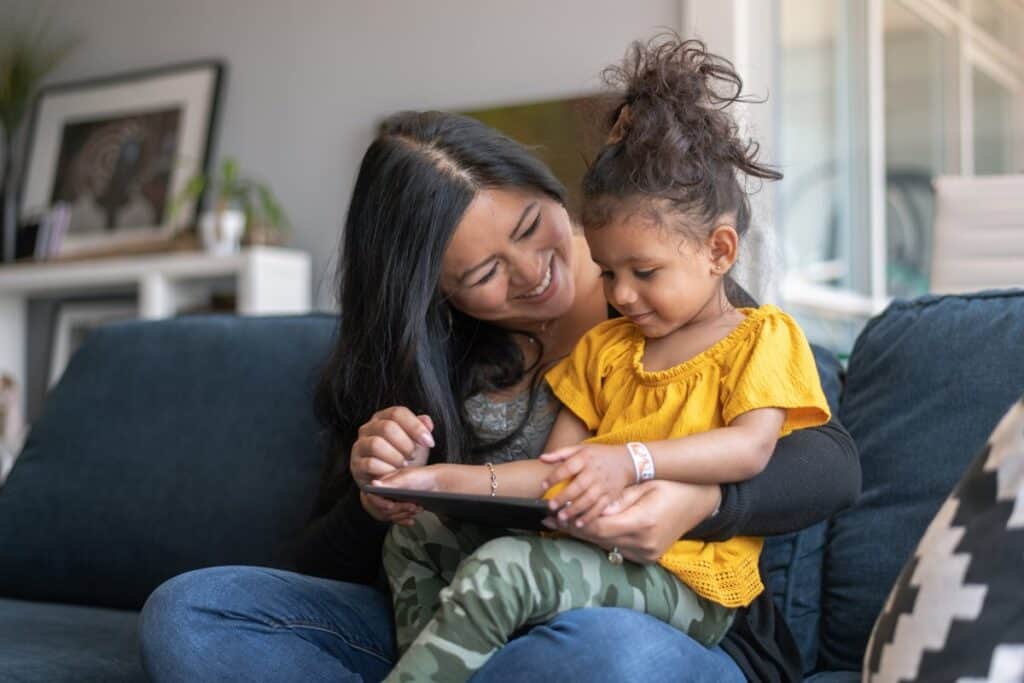
  • Watch together. Co-viewing allows you to engage with your child during screen time—asking questions, exploring new ideas, and connecting what they see on-screen to real life. The Joan Ganz Cooney Center calls this “joint media engagement,” and it can transform passive viewing into meaningful learning.
  • Set clear limits. Decide when and how long screens are allowed, and keep a routine. For example, one hour in the evening while dinner is cooking. Predictability helps children know what to expect.
  • Avoid screens during meals and bedtime. Keeping meals screen-free encourages conversation, while turning off screens at least one hour before bedtime supports better sleep.
  • Focus on safety. For older preschoolers who may explore online content, use parental controls, disable in-app purchases, and supervise closely.
  • Prepare for transitions. Give warnings like, “Ten more minutes, then we’ll pick a new activity.” Have another option ready so your child can switch more easily.
  • Encourage movement. For every 20–30 minutes of screen time, invite your child to stretch, dance, or play outside.
  • Model healthy screen habits. Children learn by watching the adults around them, so if they often see you on your phone or another device, they’ll likely want to do the same. Stay present during playtime, set aside moments for reading and hands-on activities, and be mindful of your own screen use.

Key Takeaways

Toddlers and preschoolers learn best through play, creativity, and face-to-face time with family and friends. Limiting screens and keeping balance helps your child grow in a safe, healthy

Back

Related Articles

Featured Image for Celebrating Fall: Crafts and Activities for Your Preschooler

Celebrating Fall: Crafts and Activities for Your Preschooler

September 25, 2025
Art & Music
Holidays
Parent Resources
Featured Image for When Not to Help Your Child: Fostering Independence and Confidence

When Not to Help Your Child: Fostering Independence and Confidence

August 26, 2025
Parent Resources
Social-Emotional Learning

Wellness
Featured Image for How Bedtime Routines Promote Connection

How Bedtime Routines Promote Connection

August 20, 2025
Parent Resources
Social-Emotional Learning

Become Part of Our School Community

Learn more about how we partner with families during this journey.


Contact Us
  • Employer Partnerships
  • Blog
  • Careers
  • Privacy Policy
  • CA Privacy
  • Terms of Use
  • Sitemap

©2025 All Rights Reserved Spring Education Group

Headquartered in Campbell, California, Spring Education Group is majority-owned by investment funds administered by Primavera Holdings Limited, an investment firm owned by Chinese persons and principally based in Hong Kong with operations in the United States, China and Singapore.

Follow Us:
youtube facebook instagram
Contact Us